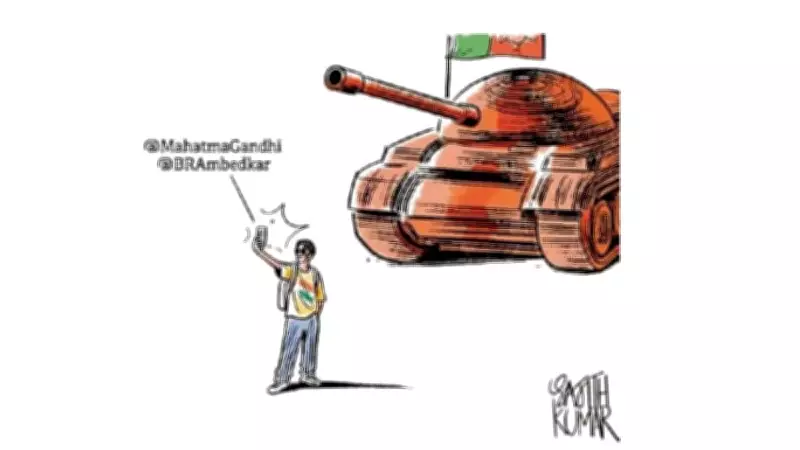
The Deccan Herald editorial cartoon titled "Mentioning the revolutionaries" takes a satirical look at how Indian politicians often name-drop historical figures like Bhagat Singh, Chandrashekhar Azad, and others during speeches, only to ignore their ideals in governance. The cartoon, published in the opinion section, uses visual humor to highlight the selective memory of leaders who invoke revolutionaries for political gain without addressing the core issues they fought for.
Visual elements and symbolism
The cartoon likely depicts a politician pointing to a portrait of revolutionaries while standing in front of a broken system or ignoring contemporary problems. Such visual metaphors are common in Deccan Herald's editorial cartoons, which aim to provoke thought on current affairs. The artist's style often blends irony with clear messaging, making complex issues accessible to readers.
Context of revolutionaries in Indian politics
Revolutionaries like Bhagat Singh are frequently referenced during election campaigns or national holidays, but critics argue that their radical ideas—such as socialism and anti-colonial resistance—are often diluted. The cartoon suggests that merely mentioning these figures is a hollow gesture without substantive action. This theme resonates with ongoing debates about historical memory and political accountability in India.

Reception and impact
Editorial cartoons in major Indian dailies like Deccan Herald serve as a barometer of public sentiment. This particular cartoon has sparked discussions on social media, with users sharing their interpretations. While some praise the satire, others defend politicians' right to draw inspiration from history. The cartoon underscores the power of visual commentary in shaping political discourse.