

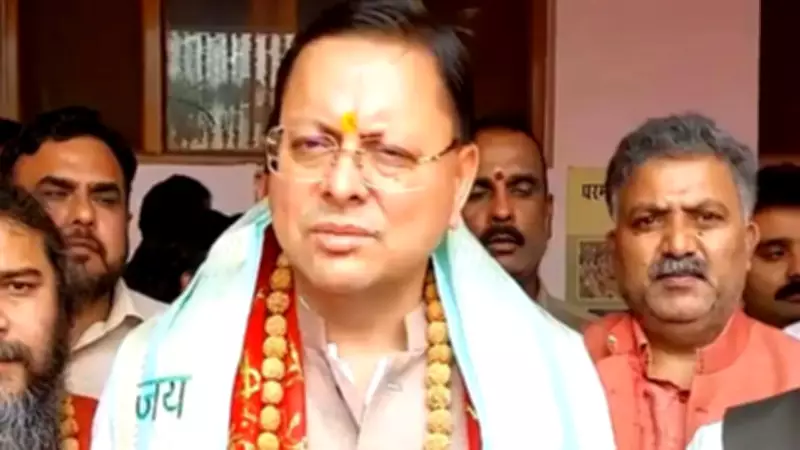
Uttarakhand Chief Minister Launches Scathing Attack on Opposition Over Women's Reservation Bill
Uttarakhand Chief Minister Pushkar Singh Dhami on Sunday unleashed a sharp critique against opposition political parties, branding them as "anti-women" and accusing them of deliberately stalling the advancement of the Nari Shakti Vandan Adhiniyam. Dhami asserted that those who governed the nation for six decades following independence consistently failed to safeguard women's rights, while he praised Prime Minister Narendra Modi for shepherding the passage of the landmark 33% reservation bill through Parliament.
Dhami Credits PM Modi, Condemns Opposition for Creating Implementation Hurdles
In pointed remarks delivered to reporters, Dhami elaborated on his accusations, stating, "Those who ruled the country for six decades after independence never did anything substantive for the rights and empowerment of women. Under the visionary leadership of Prime Minister Narendra Modi, the Nari Shakti Vandan Adhiniyam, which mandates 33% reservation for women in legislative bodies, was successfully passed by the Parliament. However, when it was poised for implementation from 2029 through a necessary amendment, opposition forces created deliberate hurdles and stalled women's rights and political representation. Their actions reveal they are fundamentally anti-women, and they now stand fully exposed before the entire nation."
Constitutional Amendment Bill Fails in Lok Sabha Amid Political Controversy
Dhami's comments emerge against the backdrop of the recent failure of the Constitution Amendment Bill to secure passage in the Lok Sabha, an event that has ignited intense reactions from leaders across the political spectrum. The Lok Sabha concurrently took up three critical bills for consideration and voting:

- The Constitution (One Hundred and Thirty-first Amendment) Bill
- The Delimitation Bill
- The Union Territories Laws (Amendment) Bill
Following a comprehensive debate on these three legislative pieces, a division was called specifically on the Constitution Amendment Bill. The vote resulted in 298 members supporting the bill and 230 opposing it, leading to its defeat. Consequently, the government announced it would not proceed with the two other linked bills, as they were integrally connected to the failed amendment.
Key Provisions of the Defeated Bills and Opposition's Stance
The proposed legislation package aimed to enact significant structural changes to India's parliamentary framework. The bills collectively sought to:
- Increase the total strength of the Lok Sabha from the current 543 seats to 816 seats.
- Implement a 33% reservation for women within this expanded legislature.
- Carry out delimitation exercises based on the demographic data from the 2011 census, ensuring a proportionate increase in seats for all states.
Opposition parties have articulated a strong position in favor of women's reservation but expressed firm opposition to the Delimitation Bill component. They have publicly called upon the government to implement the women's reservation policy within the existing strength of the Lok Sabha, arguing that linking it to delimitation and seat expansion creates unnecessary delays and complications. This fundamental disagreement has fueled the current political impasse, with Dhami's remarks highlighting the deepening rift between the ruling establishment and opposition blocs over women's representation and legislative strategy.






