FCRA Amendments Face Lok Sabha Hurdle Amid Political Turmoil
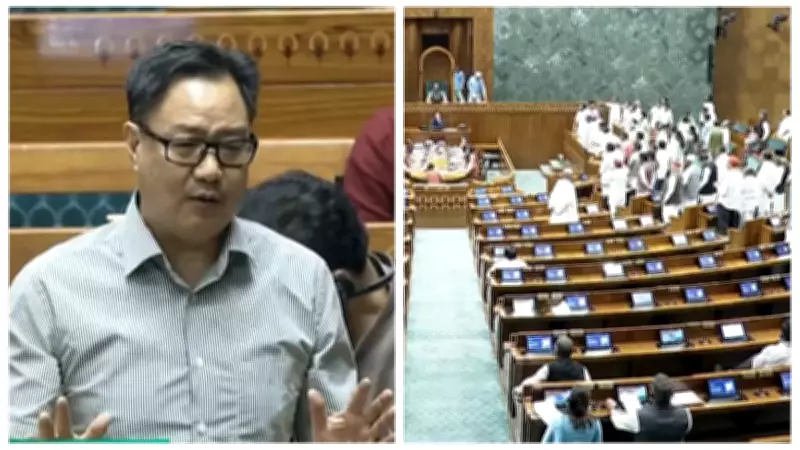
In a significant development in India's parliamentary proceedings, the proposed amendments to the Foreign Contribution Regulation Act (FCRA) have been effectively stalled in the Lok Sabha. Union Minister Kiren Rijiju announced on Tuesday that no discussion took place regarding the crucial bill, attributing the delay to persistent protests by the Opposition.
Rijiju Accuses Opposition of Election-Driven Misinformation
Minister Rijiju did not mince words as he directly accused the Opposition of deliberately misleading the country. He linked their disruptive tactics to the upcoming Assembly elections in Kerala, suggesting that political calculations were overshadowing legislative business. "The Opposition's actions are not in the national interest but are motivated by electoral gains in Kerala," Rijiju asserted during his statement to the press.
The FCRA bill, which aims to amend regulations governing foreign contributions to non-governmental organizations and other entities, has been a contentious issue. Proponents argue it strengthens transparency and national security, while critics claim it could stifle civil society. The lack of discussion highlights the deepening political divide in Parliament.

Implications for Legislative Agenda and Kerala Politics
This postponement raises questions about the government's ability to advance its legislative agenda during the current session. Key points include:
- Timing Concerns: The delay coincides with the heated campaign season for the Kerala Assembly elections, fueling speculation about political maneuvering.
- Opposition Strategy: Protests have become a common tool for the Opposition to highlight issues, but Rijiju's remarks suggest a more targeted approach linked to regional politics.
- FCRA's Importance: The amendments are seen as pivotal for regulating foreign funding, making their stagnation a matter of national policy significance.
Observers note that such gridlocks are not uncommon in Indian politics, especially when state elections loom. However, the explicit connection drawn by Rijiju between the protests and Kerala polls adds a new layer of complexity. It underscores how regional electoral dynamics can influence central legislative processes, potentially delaying reforms that have broader implications.
As the situation unfolds, stakeholders from civil society, political parties, and the public are closely watching. The FCRA bill's fate may now hinge on the outcome of the Kerala elections and subsequent political alignments, highlighting the intricate interplay between state and national politics in India's democratic framework.