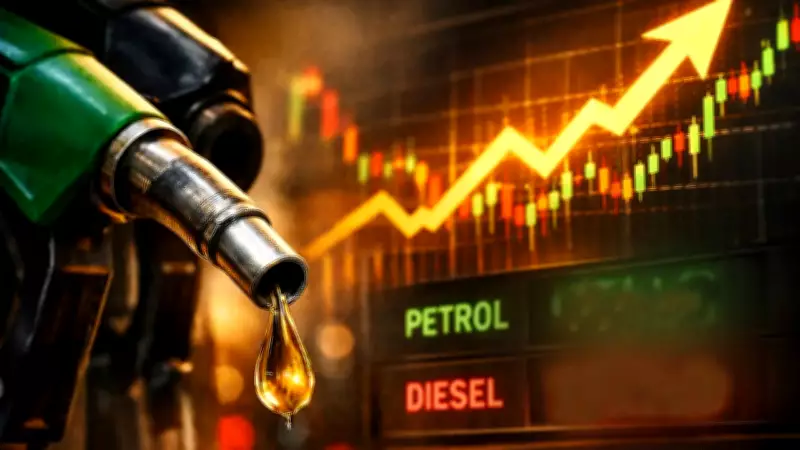
The surge in global crude oil prices above $100 per barrel since the onset of the US-Iran conflict has sent shockwaves across major economies worldwide. With the Strait of Hormuz still largely closed and only a trickle of traffic flowing through, supply disruptions persist with no immediate end in sight. Consequently, major economies, including India, have been compelled to raise petrol and diesel prices as import bills continue to climb.
India's Fuel Price Situation
In India, the under-recoveries suffered by oil marketing companies before the price hike last Friday were estimated at around Rs 1,000 crore per day, according to the Oil Ministry. This is despite the government's earlier excise duty cuts on petrol and diesel to cushion consumers. Since Friday, petrol and diesel prices have been hiked twice: initially by Rs 3 per litre, followed by approximately 90 paise per litre today. Economists warn that if the situation does not improve, further hikes may be imminent. However, the gradual approach aims to avoid an immediate inflation shock to the economy.
Global Comparison of Fuel Price Hikes
India has raised its petrol and diesel rates by around 4%, significantly less than the double-digit increases seen in other major economies such as the US, China, and Japan. The sharpest fuel price increases have occurred in liberalized emerging economies heavily dependent on West Asian energy supplies and shipping routes, particularly where governments have not intervened to cushion consumers. In countries with market-linked fuel pricing, the jump in international crude costs quickly translated into retail rates.

Retail Price Changes (23 February 2026 to 15 May 2026)
- Myanmar: Petrol +89.7%, Diesel +112.7%
- Pakistan: Petrol +54.9%, Diesel +44.9%
- United Arab Emirates: Petrol +52.4%, Diesel +86.1%
- United States: Petrol +44.5%, Diesel +48.1%
- China: Petrol +21.7%, Diesel +23.7%
- France: Petrol +20.9%, Diesel +31%
- Bangladesh: Petrol +16.7%, Diesel +15%
- Japan: Petrol +9.7%, Diesel +11.2%
- India: Petrol +4.2%, Diesel +4.4%
- Saudi Arabia: Petrol 0%, Diesel 0%
Petrol prices in countries such as Myanmar, Malaysia, Pakistan, and the UAE have surged by over 50% compared to pre-conflict levels. Diesel has climbed even faster, largely due to its stronger connection to freight movement and global trade. Compared to three months ago, petrol prices are now roughly 55% higher in Pakistan, 56% higher in Malaysia, and nearly 52% higher in the UAE.
Developed Economies Also Affected
Developed economies have also experienced significant increases, though the rise is relatively lower in percentage terms. In the United States, retail fuel prices respond rapidly to crude movements due to lower tax burdens, with petrol up 45% and diesel up 48%. Across Europe, higher excise duties have softened the impact, but increases remain notable: the UK saw petrol rise 19% and diesel 34%; Germany recorded 14% for petrol and 20% for diesel; France saw 21% and 31% respectively. In Asia, Japan, South Korea, and Singapore kept petrol inflation below 20%, though diesel prices moved substantially higher. Singapore witnessed a nearly 65% jump in diesel prices.
India's Strategic Pause and Recent Hike
In India, public sector oil marketing companies, which account for nearly 90% of the country's fuel retail network, kept petrol and diesel prices broadly unchanged from February 23, 2026, until May 15, 2026. During this period, these firms absorbed the impact of elevated crude prices at the refinery level. The latest revision—an increase of Rs 3.91 per litre for both petrol and diesel—marks the first hike in almost four years.