

Governor Gehlot's Walkout Sparks Constitutional Debate in Karnataka Legislature
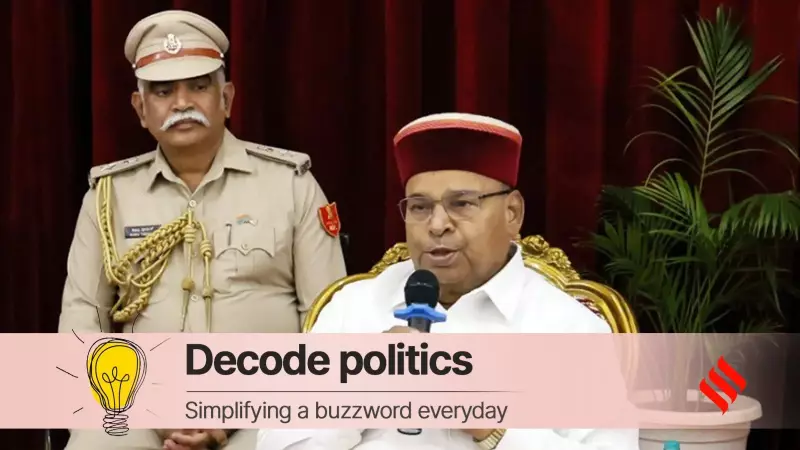
In a dramatic turn of events during the first session of the year, Karnataka Governor Thawar Chand Gehlot walked out of the Legislative Assembly on Thursday after reading merely three lines of his customary address. The 43-page speech, meticulously prepared and approved by the state Cabinet, was intended to outline the government's annual agenda but was truncated to less than two minutes of delivery.
Governor Gehlot expressed significant reservations about several paragraphs within the speech that were critical of the Union government. His abrupt departure from the House triggered immediate protests from ruling Congress legislators, who viewed this action as a direct challenge to constitutional norms and democratic processes.
Southern States Witness Similar Confrontations
This development in Karnataka follows strikingly similar incidents in two other Opposition-ruled southern states earlier this week. In Tamil Nadu, Governor R N Ravi made headlines by walking out of the Assembly without delivering his inaugural address at all. Meanwhile, in Kerala, Governor Rajendra Vishwanath Arlekar chose to omit specific portions of the speech that had been cleared by the Pinarayi Vijayan Cabinet, particularly those containing criticism of the central government.

Chief Minister Siddaramaiah of Karnataka did not mince words in his response, accusing Governor Gehlot of "violating his constitutional obligation" and hinting at potential legal recourse through the courts. The political atmosphere remains charged as constitutional experts weigh in on the implications of these unprecedented actions.
The Constitutional Mandate of Governor's Address
Understanding the gravity of these events requires examining the constitutional framework governing Governor's addresses. According to Article 176 of the Indian Constitution:
- The Governor must address the House at the commencement of the first session after each general election
- The Governor must address the House at the beginning of every calendar year
- The House must allocate time to discuss matters referred to in such address
This address serves multiple crucial functions:
- It formally opens the legislative session
- It explains why the House has been summoned
- It outlines the government's legislative agenda and financial requirements for the year
- It forms the basis for the subsequent motion of thanks, allowing legislators to debate government policies
The constitutional design mirrors the presidential address to Parliament under Article 87, both deriving from British parliamentary traditions adopted during India's constitutional drafting process.
Judicial Interpretations and Precedents
Indian courts have consistently emphasized the mandatory nature of the Governor's address while acknowledging practical realities of legislative proceedings. Several landmark cases provide crucial context:
In 1952, the Orissa High Court established that the Legislature does not "legally assemble" for business purposes until the Governor declares the causes of its summons, making the address a constitutional prerequisite.
The 1965 Calcutta High Court ruling created an important distinction when it upheld Assembly proceedings despite the Governor being forced to abandon his address due to disturbances. The court noted that "the consequence of non-delivery of the whole of the address, by word of the mouth, was not such as rendered the subsequent proceedings inside the Legislative Chamber illegal but merely resulted in procedural irregularity."
Similarly, the Rajasthan High Court in Yogendra Nath v. State (1967) emphasized that what matters constitutionally is "the Governor coming into direct and immediate communication with the representatives of the people" rather than the mechanical reading of every word.

Historical Evolution and Contemporary Relevance
The practice of Governor's addresses has evolved significantly since India's independence. Originally required at the start of every session, this was amended through the Constitution (First Amendment) Act, 1951 to apply only to the first session of each year and after general elections. Dr. B R Ambedkar explained this change was necessary to remove procedural uncertainties.
Despite this evolution, the practice has faced criticism from constitutional experts. Former President R Venkataraman famously described it as a "British anachronism" that reduces the Head of State to a mere mouthpiece of the elected government. However, he maintained that as long as the practice exists constitutionally, the address must be delivered as prepared since it represents the government's agenda, not the Governor's personal views.
Escalating Tensions in Federal Relations
The current confrontations reflect deeper tensions in India's federal structure, particularly between Opposition-ruled states and Governors appointed by the central government. In Tamil Nadu, Governor Ravi has now walked out of the Assembly for four consecutive years, with the latest incident occurring moments after the State Anthem was played.
Following Governor Ravi's departure, Chief Minister M K Stalin moved a resolution condemning the action and treating the prepared address as read, a move endorsed by the Speaker who then read the Tamil version. The Governor's office countered by alleging that his microphone was "repeatedly switched off" and that the address contained "unsubstantiated claims and misleading statements."
In Karnataka specifically, Governor Gehlot objected to language describing the state as "facing a suppressive situation in economic and policy matters" and criticism of the Centre's replacement of MGNREGA with the G RAM G Act. These objections highlight the delicate balance between state governments' right to articulate their positions and Governors' constitutional roles.
The Broader Political Context
These incidents occur against the backdrop of increasing friction between state governments and Raj Bhavans across several Opposition-ruled states. Governors, while constitutionally empowered to raise objections and suggest changes during private consultations, traditionally resolve such matters discreetly before sessions commence.
When Governors decline to read speeches, omit portions unilaterally, or walk out publicly, these disagreements transform into open confrontations between unelected constitutional authorities and elected executives. This pattern raises fundamental questions about:
- The appropriate boundaries of gubernatorial discretion
- The preservation of states' legislative autonomy
- The maintenance of cooperative federalism
- The constitutional balance between different branches of government
As legal experts analyze these developments, the nation watches closely how these constitutional questions will be resolved, potentially setting important precedents for India's democratic functioning and federal relationships.





