Gujarat Congress Accuses Election Commission of Shirking Responsibility Amid Electoral Roll Controversy
In a significant development in Gandhinagar, the opposition Congress party has leveled serious allegations against the Election Commission of India (ECI), claiming it is failing in its duty to safeguard citizens' fundamental voting rights. The controversy centers around the ongoing Special Intensive Revision (SIR) of the electoral roll in Gujarat, with the Congress demanding immediate criminal proceedings against those allegedly misusing official forms to manipulate voter lists.
Massive Form Processing Figures Revealed Amid Political Storm
The office of the Chief Electoral Officer (CEO) in Gujarat disclosed on Thursday that until January 28, a staggering 6,88,116 Form 6 and 6A applications had been submitted for adding names to the electoral roll. Simultaneously, 9,88,621 Form 7 applications were filed for name deletions, creating a total of over 1.6 million forms processed during this revision period. These substantial numbers emerge as the political temperature rises ahead of crucial electoral processes.
Congress Delegation Confronts Election Officials with Specific Complaints
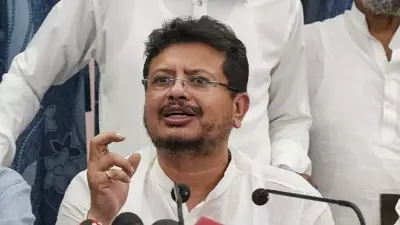
A delegation from the Gujarat Congress unit, led by state party president Amit Chavda, met with Chief Electoral Officer Hareet Shukla in Gandhinagar to present a detailed memorandum of grievances. The Congress leaders expressed particular outrage over what they describe as the "mischievous" filing of Form 7 objections without supporting evidence, specifically targeting prominent individuals including Padma Shri awardees.

Shahbuddin Rathod and Haji Ramakdu, both distinguished Padma Shri recipients, found their names targeted for deletion through Form 7 submissions. Additionally, the Congress revealed that similar deletion attempts were made against Sirajuddin Kazi, a former state minister, raising serious questions about the motives behind these coordinated actions.
Allegations of Systematic Rule Violations and Conspiracy
The Congress memorandum explicitly accused electoral registration officers of deliberately ignoring Rule 15(1)(b) of electoral procedures, which mandates the public exhibition of every objection filed. "It is seen that, deliberately, none of your electoral registration officers is following this crucial rule," the document stated, suggesting a systematic failure in transparency.
Speaking to reporters after submitting the memorandum, Amit Chavda minced no words in his condemnation: "Form 7 is being misused as part of a conspiracy to deprive people of their voting right." This strong language underscores the party's conviction that the electoral roll revision is being manipulated for political advantage rather than administrative accuracy.
Extended Timelines and Verification Processes Under Scrutiny
The Election Commission has extended the deadline for submitting objections or claims regarding electoral roll inclusions and exclusions until January 30. According to the CEO office's statement, "Election officials will verify the validity of objections and proceed with their resolution," indicating that all contested entries will undergo scrutiny before finalization.
The SIR campaign timeline reveals a structured approach: the enumeration phase commenced across Gujarat on October 27, 2025, followed by the publication of the draft electoral roll on December 19. The verification phase, originally scheduled to conclude earlier, has now been extended to align with the January 30 deadline for objections, providing additional time for resolution of disputed cases.

Broader Implications for Electoral Integrity in Gujarat
This controversy emerges at a critical juncture for Gujarat's electoral landscape, where every vote carries significant weight. The Congress party's allegations touch upon fundamental democratic principles, questioning whether administrative processes are being weaponized for political gain. The involvement of high-profile individuals like Padma Shri awardees adds gravity to the accusations, suggesting that even respected citizens are not immune to potential electoral manipulation.
As the January 30 deadline approaches, all eyes remain on how election officials will address these serious allegations while ensuring the electoral roll's accuracy and fairness. The outcome of this verification process will likely have far-reaching consequences for public trust in electoral institutions and the integrity of future voting exercises in the state.