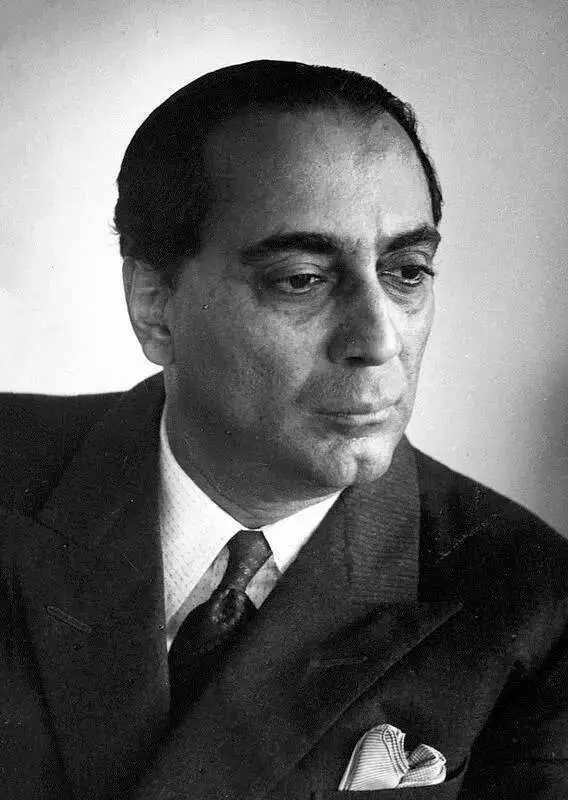
Remembering Homi Bhabha: 60 Years After the Tragic Air Crash That Shook India
Sixty years ago today, on January 24, 1966, India began what seemed like just another routine day. However, by around 12:30 PM, the nation was plunged into shock and grief as news broke that Homi Bhabha, the visionary architect of India's nuclear programme, was among the 117 passengers killed in a devastating Air India Boeing 707 crash over Mont Blanc in the Swiss Alps.
The Fateful Flight and Its Aftermath
The ill-fated flight was en route from Mumbai to London, with scheduled stops in New Delhi, Beirut, and Geneva. From Geneva, Bhabha was supposed to travel to Vienna for a crucial meeting of the International Atomic Energy Agency (IAEA). Official investigations later cited miscommunication between the Geneva air traffic control and the pilot as the primary reason for the tragic accident.
Anil Kakodkar, a current member and former chairman of the Atomic Energy Commission, revealed intriguing details about the circumstances. "Bhabha was originally scheduled to depart for Vienna on January 23," Kakodkar told TOI. "However, a suicide incident in Trombay that day led him to postpone his departure by 24 hours. At the very last minute, he changed his flight." This twist of fate meant Bhabha boarded the doomed aircraft.

Bhabha's sudden and unexpected death occurred at a critical juncture when India was advancing towards developing nuclear weapon capability. His loss plunged the entire country into deep mourning, leaving a void in the scientific community that was hard to fill.
Mumbai's Changing Landscape and Fading Legacy
Six decades later, Mumbai—the city of Bhabha's birth—has transformed almost beyond recognition. Amid rapid urban development, many landmarks associated with Bhabha's life have vanished, and there is surprisingly little in the public domain to honour his monumental contributions. No significant memorial or dedicated museum exists to cherish the legacy of the man who secured nuclear independence for India.
Kakodkar remarked, "Preserving history is not a strong point with us, but the archival department of TIFR (Tata Institute of Fundamental Research) is doing a commendable job." Both TIFR and BARC (Bhabha Atomic Research Centre) were Bhabha's brainchildren, yet they remain largely inaccessible to the public due to stringent security protocols. A garden dedicated to Bhabha within BARC's premises exists, but gaining entry is challenging for ordinary citizens.
Failed Efforts and Institutional Memory
Kakodkar's comment on historical preservation gains poignancy when considering the Bhabha museum at the Kenilworth residential apartments on Pedder Road. This museum has remained closed for years due to operational disputes—primarily a disagreement between the Department of Atomic Energy and the Kenilworth Residents Association over who should cover the electricity bill. Kenilworth stands on the site where Bhabha was born into an affluent Parsi family.
The colonial bungalow where Bhabha spent much of his life, named Mehrangir and located near the Hanging Gardens in Malabar Hill, met a similar fate. Inherited by his brother since Bhabha was unmarried and later bequeathed to the National Centre for Performing Arts, the sprawling house was eventually sold and demolished in 2016. This occurred despite vigorous efforts by Mumbaikars and members of the nuclear fraternity to save it.
These events marked the end of attempts to establish a public memorial for one of India's most eminent scientists and institution builders. Umeshkumar Rustagi, director of the Nehru Science Centre in Mumbai, acknowledged, "I agree there is no public museum honouring Bhabha. However, it is also true that Bhabha and his contributions have been etched in memory through the many institutions that honour his work."
Rustagi noted that the Nehru Science Centre hosted an exhibition decades ago showcasing Bhabha's life and achievements. Additionally, the Centre's Hall of Nuclear Power gallery features a dedicated space celebrating Bhabha's pioneering work.

A Call to Strengthen Bhabha's Legacy
Kakodkar, who had a personal connection with Bhabha, emphasized the need for greater efforts. "I strongly feel that a lot needs to be done to strengthen and expand Bhabha's legacy in various ways, which is currently lacking," he stated. Reflecting on Bhabha's philosophy, Kakodkar added, "Bhabha emphasized the importance of autonomy and a liberal mindset. He possessed a long-term vision, and it is because of this that critical fields like the Indian space programme and electronics developed."
As India commemorates the 60th anniversary of this tragic loss, the conversation around preserving Homi Bhabha's legacy highlights both the enduring impact of his work and the ongoing challenges in memorializing national heroes in a rapidly evolving urban landscape.