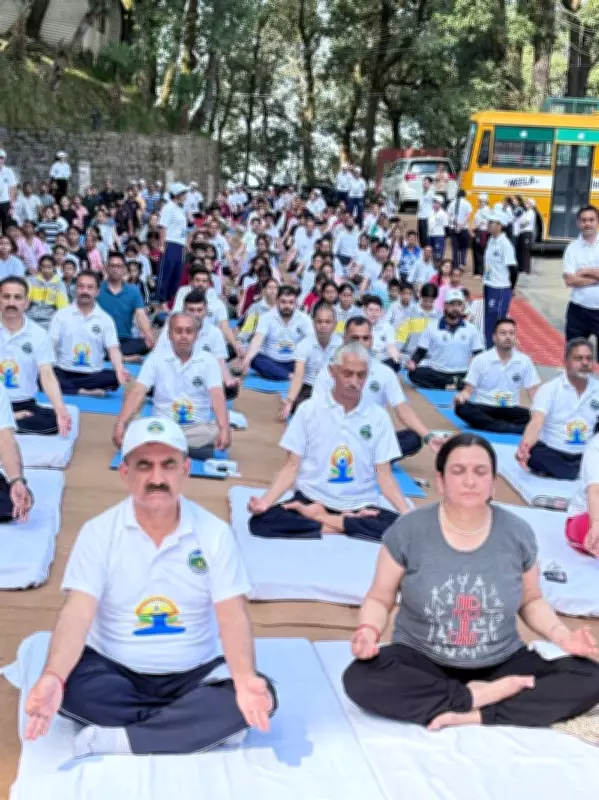
Himachal Pradesh University (HPU) Vice-Chancellor Prof Mahavir Singh called for daily yoga practice of 30 to 40 minutes to effectively manage examination and career-related stress while mitigating the adverse effects of the digital age. He made the remarks after leading a mass yoga session at the university to celebrate the 12th International Yoga Day.
Mass yoga session draws enthusiastic participation
The event saw active involvement from students, faculty members, and non-teaching staff, all performing asanas under the VC's guidance. Participants executed Surya Namaskar, Tadasana, Vrikshasana, Bhujangasana, and Anulom-Vilom, followed by meditation. Students from the Department of Yoga additionally demonstrated various yogic postures and Shatkarmas.
Yoga as a complete science for well-being
Prof Singh stated, “Yoga is not merely a form of physical exercise but a complete science that promotes the well-being of the body, mind and soul.” He noted that in today's fast-paced world, stress, depression, insomnia, and lifestyle diseases are rising, making yoga a natural and effective solution. “Regular practice not only helps prevent physical ailments but also enhances mental peace, concentration and positive energy,” he added.

Global embrace of yoga
The VC emphasized that yoga teaches discipline, self-control, and patience, enabling practitioners to maintain balance even in difficult situations. He highlighted that more than 190 countries have adopted yoga as a way of life. Describing yoga as an invaluable part of India's cultural heritage, he pointed out that the practice, propounded by sages over 2,500 years ago, remains highly relevant. “Scientific research has also recognised the benefits of yoga asanas, pranayama and meditation in strengthening the immune system and bringing positive changes at the cellular level,” Prof Singh said.
HPU promotes yoga research
The Vice-Chancellor further noted that the university is actively promoting research by integrating yoga with scientific studies, underscoring its commitment to advancing the ancient practice through modern inquiry.