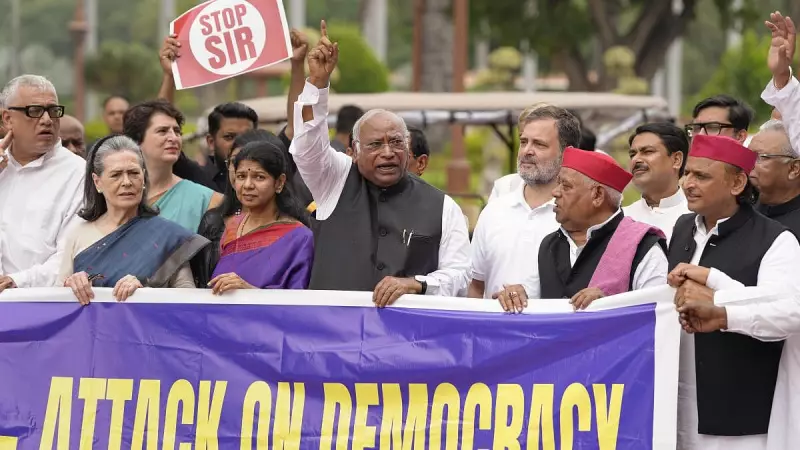
The opposition I.N.D.I.A. alliance, formed to present a united front against the ruling BJP, is encountering significant internal challenges at the state level. While the bloc's leaders maintain a facade of unity in Parliament, the cooperation seen in New Delhi is failing to materialize in joint political actions on the ground across various states.
Parliamentary Unity Masks State-Level Divisions
Observers note a clear disconnect between the alliance's coordinated efforts on Sansad Marg and the political realities in the states. The bonhomie displayed during parliamentary sessions and high-level meetings has not translated into a cohesive strategy for local elections or grassroots mobilization. This growing drift among constituent parties like the Congress, Samajwadi Party (SP), and Rashtriya Janata Dal (RJD) could undermine the bloc's long-term viability.
The core issue appears to be competing interests at the state level, where each party is primarily focused on protecting its own political turf. This inherent tension is creating obstacles for formulating a common minimum program or seat-sharing agreements for upcoming local body and assembly polls, which are crucial stepping stones for the 2026 electoral battles.

The 2026 Challenge: Can the Bloc Hold Together?
As the political calendar moves closer to 2026, these internal fissures pose a serious threat to the alliance's effectiveness. The inability to present a united front in state politics weakens the narrative of a strong, pan-India opposition coalition. Parties within the I.N.D.I.A. grouping are finding it difficult to reconcile national alliance commitments with their immediate need to counter regional rivals, who are often also part of the same national bloc.
This scenario suggests that the bloc may face more formidable challenges from within its own ranks than from external opponents in the run-up to 2026. The coming months will be a critical test of whether the alliance can bridge the gap between its parliamentary posture and its field-level operations.
Implications for National Opposition Strategy
The ongoing strain highlights a fundamental structural weakness in the opposition coalition. A successful national alliance typically requires synergy between central leadership and state units. The current lack of joint action on the ground indicates that state party cadres are not fully aligned with the coalition's national objectives.
If these divisions are not addressed, the I.N.D.I.A. bloc risks becoming a Delhi-centric grouping with limited influence in key states. This would significantly dent its ability to mount a credible challenge in future elections. The bloc's survival may depend on its capacity to forge pragmatic compromises that allow member parties to collaborate in states without sacrificing their core voter bases.
As noted by political analyst Shemin Joy, the situation remains fluid, but the trends observed in early January 2026 point toward a period of intense negotiation and potential conflict within the alliance. The ultimate outcome will shape the landscape of Indian opposition politics for years to come.