India has firmly rebuked Pakistan over its recent statements regarding the Indus Waters Treaty, asserting that the agreement remains in abeyance because of Islamabad's continued sponsorship of cross-border terrorism. The Indian Ministry of External Affairs issued a strong statement on Friday, reiterating that the treaty cannot function normally until Pakistan addresses India's core concerns related to terrorism.
India's Stance on the Indus Waters Treaty
The Ministry of External Affairs spokesperson emphasized that the Indus Waters Treaty, signed in 1960, is a bilateral agreement that requires mutual trust and cooperation. However, India has repeatedly raised the issue of Pakistan's involvement in terrorist activities, including the 2016 Uri attack and the 2019 Pulwama attack, which have severely impacted bilateral relations. India has made it clear that the treaty's implementation cannot be business as usual when Pakistan continues to use terrorism as a tool of state policy.
According to official sources, India has not participated in meetings of the Permanent Indus Commission since 2019, citing Pakistan's failure to take action against terrorist groups operating from its soil. The Indian government has also suspended the sharing of hydrological data under the treaty, arguing that such cooperation is untenable in the current security environment.

Pakistan's Rhetoric and India's Response
Pakistan's recent statements, including those by its foreign minister, have sought to portray India as violating the treaty. India has categorically rejected these allegations, stating that it is Pakistan's actions that have undermined the treaty's spirit. The Indian External Affairs Ministry said, "The onus lies on Pakistan to create an atmosphere free of terror for the treaty to function effectively."
India has also highlighted that the treaty includes provisions for resolving disputes through neutral experts or the World Bank, but Pakistan has not approached these mechanisms in good faith. Instead, Islamabad has resorted to public posturing, which India views as an attempt to divert attention from its internal issues and its failure to control terrorist networks.
Impact on Water Sharing and Regional Stability
The Indus Waters Treaty governs the sharing of six rivers between the two nations. India controls the eastern rivers (Ravi, Beas, Sutlej) while Pakistan has rights over the western rivers (Indus, Jhelum, Chenab). The treaty is considered a landmark agreement that has survived multiple conflicts, including wars in 1965 and 1971. However, the current impasse has raised concerns about water security in the region, particularly in Pakistan, which is heavily dependent on the Indus basin for agriculture.
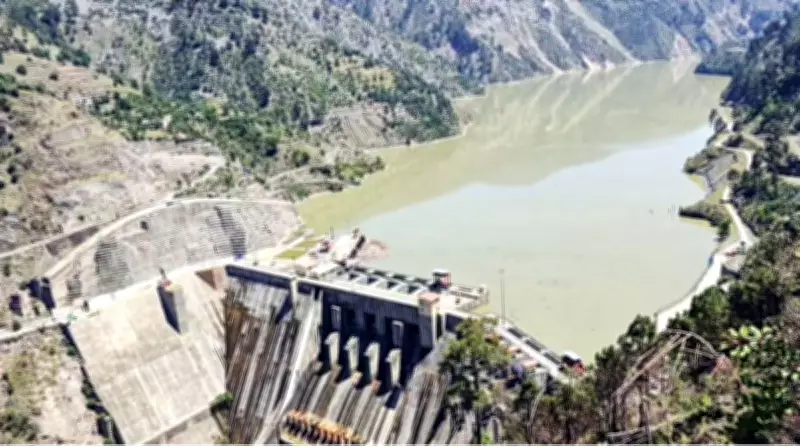
Experts warn that the stalemate could lead to increased tensions and potential water scarcity in Pakistan. India, on the other hand, has been developing its own water infrastructure projects on the western rivers, within the treaty's limits, to meet its growing energy and irrigation needs. These projects, such as the Kishanganga and Ratle hydroelectric plants, have been a source of contention, but India maintains they are in full compliance with the treaty.
India's Firm Position
India's latest rebuke underscores its zero-tolerance policy towards terrorism and its determination to link bilateral cooperation with Pakistan's actions on terror. The government has made it clear that any normalization of ties, including on water issues, is contingent on Pakistan taking concrete steps to dismantle terrorist infrastructure and bring perpetrators of cross-border attacks to justice.
The Ministry of External Affairs concluded its statement by reaffirming India's commitment to the peaceful resolution of disputes, but only in an environment free from terrorism. India has called on the international community to recognize Pakistan's role in sponsoring terrorism and to pressurize Islamabad to change its behavior.