

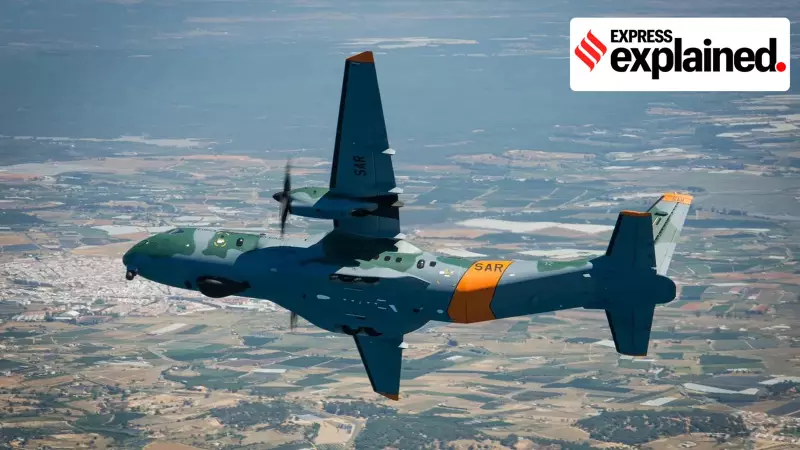
India's First 'Made in India' C295 Aircraft Set for Rollout by September 2026
In a landmark development for India's defence sector, External Affairs Minister S Jaishankar announced earlier this week that the first 'Made in India' C295 aircraft will be rolled out before September 2026. This milestone reflects the deepening of India's defence industrial collaboration with Spain and underscores the nation's growing self-reliance in military manufacturing.
Strategic Partnership and Manufacturing Details
The aircraft is being manufactured under a 2021 deal between India and Spain, formalising the acquisition of 56 Airbus C295 aircraft for Rs 21,935 crore to replace the Indian Air Force's (IAF) ageing AVRO 748 fleet. While Airbus delivered 16 aircraft in 'fly-away' condition from its final assembly line in Seville, Spain, last year, the remaining 40 aircraft are being manufactured and assembled by Tata Advanced Systems Limited (TASL) in India under an industrial partnership.
The Airbus-Tata C295 Final Assembly Line (FAL) plant in Vadodara was inaugurated in October 2024, becoming India's first private sector FAL for military aircraft. The 40 aircraft are scheduled for delivery between 2026 and 2031, with the Vadodara FAL having a capacity to assemble 12 aircraft annually.

Key Features and Capabilities of the C295
Defence Minister Rajnath Singh has highlighted that the C295's induction "will bolster medium lift tactical capability of the IAF." According to Airbus, the C295 is a versatile transport aircraft capable of multiple tasks:
- Carrying troops and cargo
- Maritime patrol and surveillance
- Airborne warning and reconnaissance
- Armed close air support
- Medical evacuation and airborne firefighting
The aircraft can carry up to nine tonnes of payload or up to 71 personnel at a maximum cruise speed of 260 knots (approximately 480 kmph). Powered by two Pratt & Whitney turboprop engines, it can cruise at altitudes up to 30,000 ft and operate from unpaved, soft, and sandy/grassy airstrips. It is also equipped for air-to-air refuelling of fixed-wing aircraft and helicopters.
Indigenisation and Economic Impact
This acquisition is crucial for two primary reasons. First, it replaces the ageing Avro fleet from the 1960s, enhancing the IAF's ability to transport troops and materials across the country. Second, it initiates India's first-ever 'Make in India' Aerospace programme in the private sector, breaking the monopoly of state-owned Hindustan Aeronautics Limited (HAL) over military aircraft manufacturing.
The partnership involves developing a complete industrial ecosystem, from producing complex parts to assembly, testing, delivery, and maintenance. Key indigenisation efforts include:
- Bharat Electronics Limited providing indigenous radar warning receivers and missile approach warning systems
- Bharat Dynamics Limited supplying the countermeasure dispensing system
- Tata industrialising around 3,500 parts annually from the airframe's over 14,000 components
While major components like engines and avionics are sourced from US-based Pratt & Whitney and Collins Aerospace, Airbus will transfer manufacturing technology to TASL for most other parts. The goal is to have 95% of the aircraft made in India within the next few years, with the 32nd aircraft (scheduled for delivery in early 2029) expected to be nearly fully Indian.
Support and Training Infrastructure
The contract includes comprehensive support elements such as special maintenance tools, ground support equipment, test equipment, technical publications, pilot training courses, and a full-motion simulator. A training facility has been established in Agra, and Airbus will provide spares support for 10 years along with a performance-based logistics contract for five years, ensuring 85% aircraft fleet availability at any given time.
This initiative is poised to boost India's aerospace sector significantly, creating thousands of high-skilled and indirect jobs over the years and reinforcing the nation's strategic autonomy in defence manufacturing.






