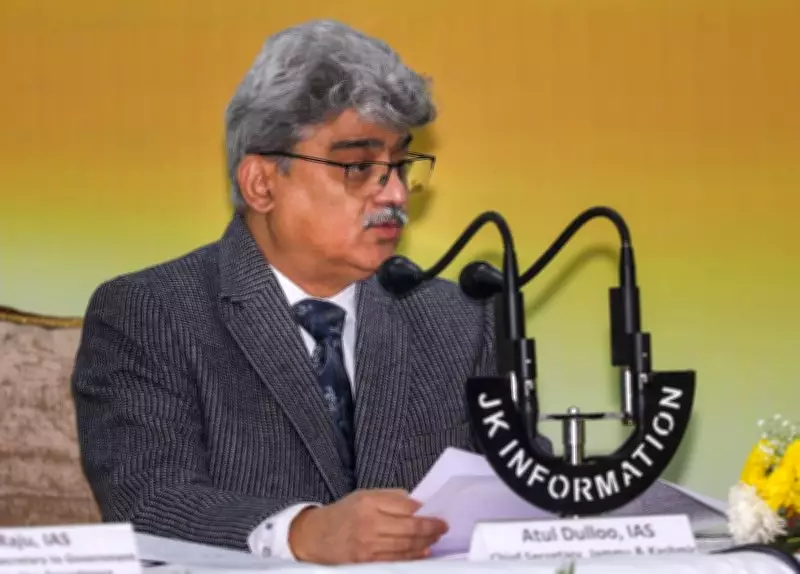
Jammu and Kashmir Chief Secretary Atal Dulloo has directed officials to identify multi-dimensionally poor families across the Union territory using the NITI Aayog's Multidimensional Poverty Index (MPI) framework. The initiative aims to strengthen inclusive governance and ensure that welfare schemes reach the most deserving people.
Data-driven approach to poverty alleviation
The identification process will rely on the National Family Health Survey (NFHS) data and the NITI Aayog MPI methodology, which measures poverty across health, education, and living standards. This approach moves beyond income-based metrics to capture the multiple deprivations that poor households face.
Chief Secretary Dulloo emphasized the need for evidence-based planning and targeted interventions. He stated, 'We must ensure that every rupee spent on welfare reaches those who need it the most. This exercise will help us identify the gaps and address them effectively.'

Household enumeration and verification
The administration will conduct a comprehensive household enumeration across all 20 districts of Jammu and Kashmir. The process will involve door-to-door surveys to collect data on indicators such as nutrition, child mortality, years of schooling, school attendance, cooking fuel, sanitation, drinking water, electricity, housing, and assets.
Officials have been directed to coordinate with the Jammu and Kashmir State Statistics and Evaluation Department and the Rural Development Department to ensure accurate data collection. The survey will be completed within three months, with preliminary results expected by October 2026.
Linking data to welfare schemes
The identified multi-dimensionally poor families will be linked to various central and state welfare schemes, including the Pradhan Mantri Awas Yojana, Ayushman Bharat, and the Public Distribution System. The goal is to create a unified database that can be used by multiple departments to avoid duplication and ensure seamless delivery of benefits.
According to the NITI Aayog's National Multidimensional Poverty Index report, Jammu and Kashmir had a poverty headcount ratio of 12.6% in 2019-21, with significant disparities between districts. The new identification drive aims to update these figures and target interventions more effectively.
Monitoring and accountability
A monitoring committee will be set up at the Union territory level to track progress and ensure transparency. The committee will review the data collection process and verify the results through sample checks. Chief Secretary Dulloo warned against any laxity, stating that strict action would be taken against officials found negligent in their duties.
The initiative is part of the broader national effort to reduce multidimensional poverty by 50% by 2030, as outlined in the Sustainable Development Goals. Jammu and Kashmir's focus on data-driven governance is expected to serve as a model for other states and Union territories.