

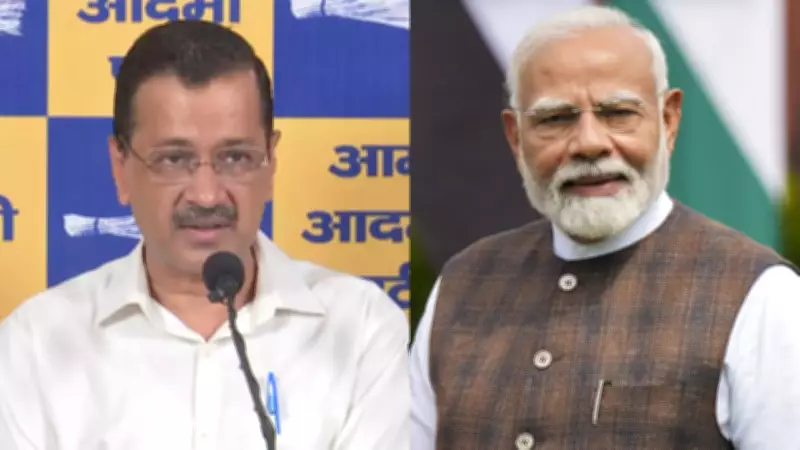
Kejriwal Launches Scathing Attack on Modi Government Over LPG Crisis
Former Delhi Chief Minister and Aam Aadmi Party (AAP) convenor Arvind Kejriwal has launched a sharp critique against the Central government, directly linking the reported shortage of LPG cylinders in India to the ongoing West Asia conflict. In a press conference held in New Delhi on Wednesday, Kejriwal alleged that Prime Minister Narendra Modi's foreign policy decisions have precipitated a severe fuel crisis across the nation.
Allegations of Foreign Policy Missteps
Kejriwal asserted that India is grappling with a significant LPG shortage because PM Modi chose to side with the United States and Israel, thereby undermining India's longstanding non-alignment policy. He claimed that this alignment has disrupted critical energy imports, particularly through the Strait of Hormuz, a key maritime route controlled by Iran. According to Kejriwal, nearly 60% of the LPG consumed in India is imported, with about 90% of that volume traditionally passing through the Strait of Hormuz. He reported a drastic drop in these imports following recent escalations in the West Asia conflict.
The AAP leader attributed the disruption to strikes carried out by Israel and the US against Iran, suggesting that Tehran is now restricting passage through the strait primarily to nations it considers friendly. Kejriwal further accused PM Modi of aligning too closely with the US, demanding his resignation over what he described as subservient behavior. He referenced PM Modi's visit to Israel in late February, where he met with Prime Minister Benjamin Netanyahu, just days before joint US-Israel strikes against Iran that killed Supreme Leader Ayatollah Ali Khamenei and triggered retaliatory actions from Tehran.

Economic and Social Impact of the LPG Shortage
Expressing deep concern, Kejriwal highlighted the immediate repercussions of the LPG shortage on various sectors. He noted that restaurants and hotels, which rely on daily LPG supplies due to safety storage limitations, are particularly vulnerable. Kejriwal warned that 20% of restaurants and hotels in Mumbai have already closed, with up to 50% potentially shutting down in the next two days. Similar impacts are anticipated in Punjab and the Delhi-NCR region, especially during the peak wedding season.
In the industrial sector, Kejriwal cited Morbi, known as the tile industry capital, where 170 out of 650 industries have ceased operations due to the fuel crisis. He projected that approximately one crore people across India could face unemployment as a result. Additionally, he criticized the government for hiking prices of both commercial and domestic LPG cylinders amid the supply crunch.
Government Response and Measures
In response to the crisis, the Union government has attributed the LPG supply issues to global energy disruptions triggered by the West Asia conflict. To manage the situation, the Centre has invoked the Essential Commodities Act, prioritizing LPG supply for households, hospitals, and essential services while curbing commercial distribution in several regions. A new rule has also been introduced, mandating a 25-day gap between domestic LPG refill bookings to control demand and prevent hoarding.
This unfolding scenario underscores the complex interplay between international geopolitics and domestic energy security, with Kejriwal's accusations bringing the issue to the forefront of political discourse in India.






