

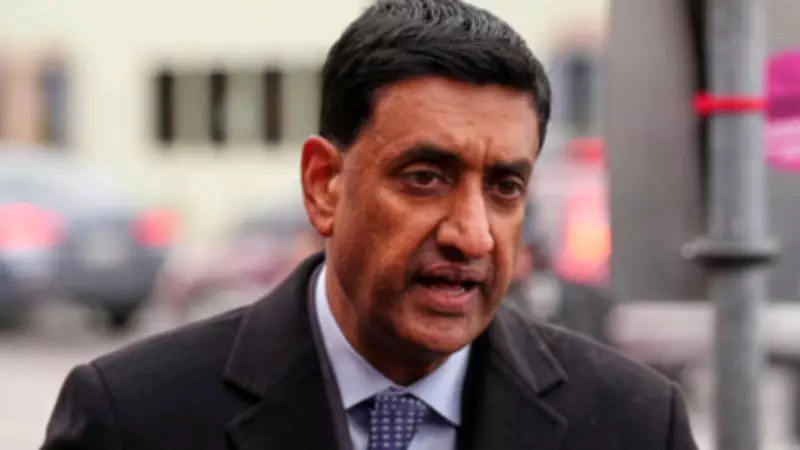
Democratic Lawmaker Ro Khanna Blasts Trump's Aggressive Iran Rhetoric
Democratic Representative Ro Khanna has voiced profound shock and condemnation over a recent Truth Social post by President Donald Trump, which contained abusive language directed at Iran. In an interview on NBC's Meet the Press, Khanna accused the president of failing U.S. troops in the region and announced his refusal to support any additional funding for the ongoing conflict.
Trump's Provocative Warning to Iran Draws Criticism
Earlier today, President Trump issued a warning on Truth Social, threatening Iran with severe consequences if it does not agree to reopen the Strait of Hormuz by Tuesday. The post, laden with harsh and abusive words, stated that Iran would be "living in Hell" if it fails to comply. This choice of language has sparked widespread criticism from political figures and analysts alike.
Khanna responded to the post during his television appearance, expressing relief over the successful rescue of a missing U.S. airman in Iran, whose fighter jet was shot down on Friday. He praised the troops involved in the operation but sharply contrasted their professionalism with the president's actions.

"Well, I am relieved, and what an extraordinary achievement of our troops. They really deserve to be commended," Khanna said. "But the president is really failing them. To have a tweet this morning cursing out and threatening war crimes, while claiming we've destroyed Iran's ballistic missile capacity, yet having troops flying over who are being shot at—it's unacceptable. We need to end this war now. We need an immediate ceasefire. Iran, Israel, and the United States must stop bombing and pursue a negotiated settlement."
Khanna Calls for Statesmanship and Opposes War Funding
In his critique, Khanna emphasized the need for diplomatic statesmanship, drawing a comparison to former President Barack Obama's approach. He argued that threats and military escalation are counterproductive to resolving the crisis in the Strait of Hormuz.
"Let me tell you what won't reopen the Strait of Hormuz: threatening war crimes or bombing indiscriminately, cursing at Iran," Khanna stated. "What we need is statesmanship like President Obama had. We must stop the bombing, implement a ceasefire, and then collaborate with Oman, China, Gulf allies, and European partners to find a solution for reopening the strait. But it's not going to happen through massive escalation."
Furthermore, Khanna made a firm commitment to oppose new war funding, specifically targeting a proposed $400 billion allocation. He framed this stance as part of a broader "new economic patriotism" that prioritizes domestic needs over military expenditures.
"No, I'm not supporting new funding. They're asking for $400 billion. The answer for every Democrat should be 'absolutely no.' We don't need to read it or study it. It's $400 billion for a war we oppose? We could have universal childcare, free public college, or pay teachers $60,000 with that money. Democrats need to oppose this funding and say, 'We're actually for the American people.'"
Broader Implications and Ongoing Tensions
This incident highlights the deepening political divide over U.S. foreign policy in the Middle East. Khanna's comments reflect growing concerns among some Democrats about the risks of escalating conflicts and the allocation of resources away from domestic priorities. The rescue of the U.S. airman, while a positive development, underscores the volatile situation on the ground, where troops remain at risk despite official claims of military success.
As tensions persist, Khanna's call for a ceasefire and diplomatic engagement signals a push for alternative strategies to address international crises, emphasizing negotiation over confrontation. The debate over war funding is likely to intensify in Congress, with implications for both U.S. foreign relations and internal political dynamics.






