Congress President Mallikarjun Kharge Takes a Humorous Dig at HD Deve Gowda in Rajya Sabha
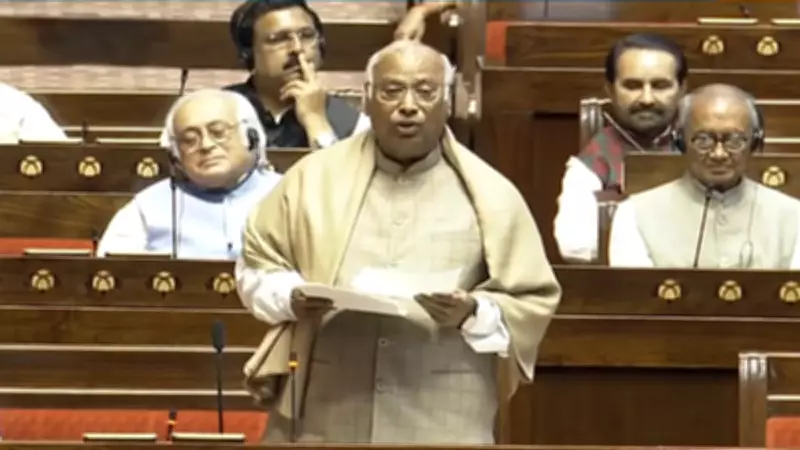
In a lively session of the Rajya Sabha, Congress President Mallikarjun Kharge delivered a witty remark aimed at former Prime Minister HD Deve Gowda, sparking amusement and highlighting the intricate political relationships in Indian politics. The comment, which referenced alliances and Prime Minister Narendra Modi, underscored the ongoing tensions and camaraderie within parliamentary proceedings.
The Context of the Exchange
The interaction occurred during a debate where political affiliations and historical alliances were under discussion. Kharge, known for his sharp oratory, seized the moment to inject humor into the proceedings, directly addressing Deve Gowda, who leads the Janata Dal (Secular) party. This party has had fluctuating alliances with both the Congress and the Bharatiya Janata Party (BJP) over the years, making the remark particularly pointed.
The specific phrase used by Kharge was: "Wo mohabbat humare saath kiye shadi Modi sahab ke saath," which translates to "That love married us, but is now with Modi sir." This metaphorical statement cleverly alluded to past political collaborations between the Congress and JD(S), contrasting them with Deve Gowda's current perceived proximity to Prime Minister Modi and the BJP-led government.

Analysis of the Political Undertones
Kharge's jibe is not merely a humorous quip but carries significant political weight. It reflects the Congress party's critique of regional parties like the JD(S) for aligning with the BJP, especially in states like Karnataka where coalition politics are crucial. By invoking "mohabbat" (love), Kharge hinted at the erstwhile partnership between Congress and JD(S), which has seen periods of cooperation and conflict.
The remark also subtly questions Deve Gowda's political consistency, implying a shift in allegiance. In Indian politics, such public exchanges often serve as tools to sway public opinion and reinforce party narratives. Kharge's ability to blend humor with critique showcases his experience as a seasoned parliamentarian, engaging both allies and opponents in the house.
Reactions and Implications
While Deve Gowda's immediate response was not detailed in reports, such exchanges typically elicit reactions ranging from laughter to rebuttals, depending on the context. Observers note that this incident adds to the ongoing discourse on coalition dynamics ahead of future elections, where alliances could play a pivotal role.
From a broader perspective, Kharge's comment highlights the Rajya Sabha's role as a forum for political banter and substantive debate. It underscores how leaders use wit to address sensitive topics, making parliamentary sessions more engaging for the public. This event may resonate in political circles, influencing perceptions of party loyalties and strategies.
In summary, Mallikarjun Kharge's witty jibe at HD Deve Gowda in the Rajya Sabha serves as a reminder of the fluid nature of political relationships in India. By combining humor with pointed commentary, Kharge effectively brought attention to issues of alliance and allegiance, enriching the parliamentary dialogue with his characteristic sharpness.