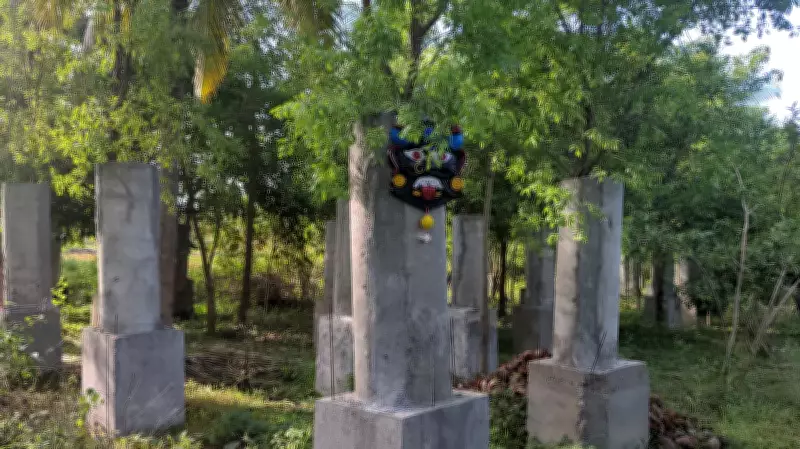
A farmer in Kunigal, Tumakuru district, has innovated a unique method to protect sandalwood trees by constructing cement ring fortresses around them. The technique aims to prevent theft and damage to the valuable trees, which are highly sought after for their aromatic wood and oil.
Innovative protection method
The farmer, whose identity has not been disclosed, uses large cement rings placed around the base of each sandalwood tree. These rings act as physical barriers, making it difficult for poachers to access the trees without detection. The cement rings are also designed to allow the trees to grow naturally while providing a sturdy defense.
Sandalwood trees are known to grow better when planted alongside other trees, as they draw nutrients, moisture, and other resources from the roots of neighboring plants. This symbiotic relationship is crucial for their health and growth. The cement rings do not interfere with this process, as they are placed around the tree without damaging the root system.

Benefits of the approach
The cement ring fortress offers several advantages. It is cost-effective compared to electronic surveillance or fencing, and it requires minimal maintenance. Additionally, the rings can be reused for new plantings. The farmer reported that since implementing this method, there have been no incidents of theft or vandalism.
According to local agricultural experts, this innovation could be replicated in other regions where sandalwood cultivation is common. The technique aligns with sustainable farming practices by using locally available materials and reducing reliance on chemical deterrents.
Impact on sandalwood cultivation
Sandalwood is a high-value crop in Karnataka, with prices reaching several lakhs per kilogram. However, theft is a major challenge for growers. The cement ring method provides a simple yet effective solution that can be adopted by small-scale farmers.
The farmer's success has attracted attention from the horticulture department, which is considering promoting the technique through training programs. Officials believe that this low-cost innovation could boost sandalwood production and help conserve the species.
In conclusion, the Kunigal farmer's cement ring fortress represents a practical response to a persistent problem, combining traditional knowledge with modern materials to protect a valuable natural resource.