

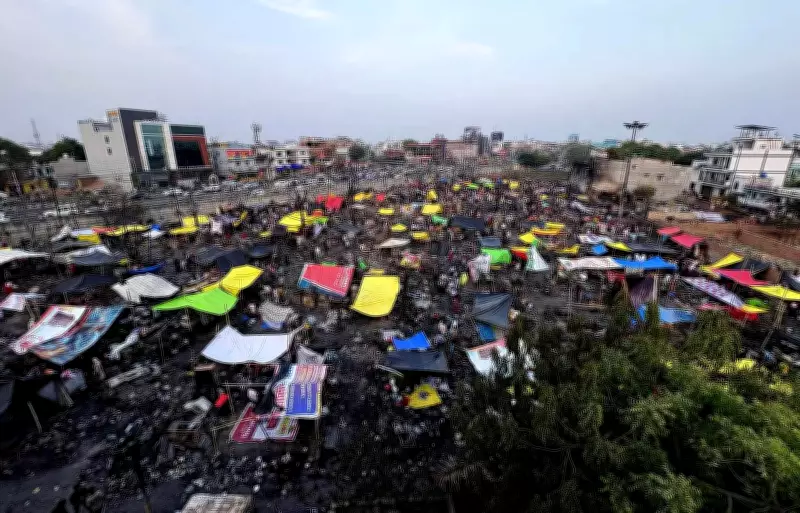
Lucknow Fire Survivors Struggle Amid Ashes, No Rehabilitation in Sight
Lucknow: A day after a devastating inferno consumed over 280 shanties in the Vikasnagar area, more than 1,000 residents have been left homeless, with scenes of profound grief and desperation unfolding as displaced families return to the charred remains of their lives. With no immediate rehabilitation plan visible, the initial shock has given way to a grim struggle for survival.
Families Forced to Rebuild Amid Debris
Families who fled the flames with nothing but the clothes on their backs are now back amidst smouldering debris, attempting to piece together fragile shelters from whatever materials they can salvage. The absence of any organized relief effort has pushed them into a dire situation where basic survival takes precedence over everything else.
Ramesh Yadav, a daily wage labourer, was seen tying a torn blue tarpaulin over a skeletal bamboo frame where his hut once stood. “Everything is gone — utensils, ration, clothes. But where do we go? This is all we have,” he said, as his wife arranged bricks to support a makeshift stove beside the ruins.

Children and Elderly Bear the Brunt
A few metres away, Shabana and her three children huddled under the open sky. Her youngest, barely four years old, clung to her dupatta as the night chill set in. “We didn’t even get time to save our documents. My husband works in a nearby factory. We cannot afford rent elsewhere,” she explained, highlighting the financial constraints that trap many in this predicament.
In another corner, Ram Kishan and Savitri sat silently beside the blackened remains of their hut, which they had built over two decades ago. “We built this over 20 years. In one hour, it vanished,” said Ram Kishan, his voice heavy with loss. As darkness fell, children stayed close to their parents, some crying through the night, frightened by memories of the flames, while others sat quietly, clutching half-burnt school bags and broken toys recovered from the debris.
Psychological Trauma and Fear Persist
Sunita, a domestic worker, tried to console her two daughters as they refused to sleep. “They keep asking if the fire will come again,” she said, underscoring the psychological trauma that lingers long after the physical danger has passed. While some families managed to secure tarpaulin sheets distributed by local volunteers, many spent the night completely exposed, using sarees and old bedsheets tied to sticks as makeshift shields against the cold breeze.
Livelihoods Destroyed, Economic Hardship Looms
The fire has not only destroyed homes but also wiped out livelihoods, pushing already vulnerable families deeper into economic hardship. Rajesh, a tea-stall vendor who used to run a small kiosk near Tedhipulia in Jankipuram, now sits beside a heap of burnt utensils. “My entire stall is gone. I used to earn just enough to feed my family daily. Now I don’t even have money to restart,” he lamented.
Similarly, Guddu, who sold snacks and cigarettes from a roadside kiosk near Tedhipulia crossing, spent the night under a torn tarpaulin. “Police won’t allow us to just set up again without materials. And even if they do, where will I get money from?” he asked, pointing to the bureaucratic and financial hurdles that compound their misery.
Women Face Additional Challenges
For women working as domestic helps in nearby residential colonies of Jankipuram and Vikasnagar, the situation is equally dire, with unique challenges that threaten their employment and safety. Rekha, who works in three households as a maid, lost all her belongings, including clothes and identity documents. “I have to report for work in the morning, but I have nothing to wear, nowhere to bathe. How do I go?” she said, highlighting the practical obstacles to maintaining her livelihood.
Another domestic worker, Shabnam, expressed fear of losing her job altogether. “If I don’t go for a few days, they might replace me. But I can’t leave my children alone here at night,” she said, caught between the need to earn and the responsibility to protect her family in this precarious environment.

The aftermath of the fire in Vikasnagar reveals a community in crisis, grappling with loss, trauma, and an uncertain future, as they await meaningful intervention and support from authorities.





