Ludhiana's Tajpur Road Dairy Complex Submerged in Waste Water Crisis
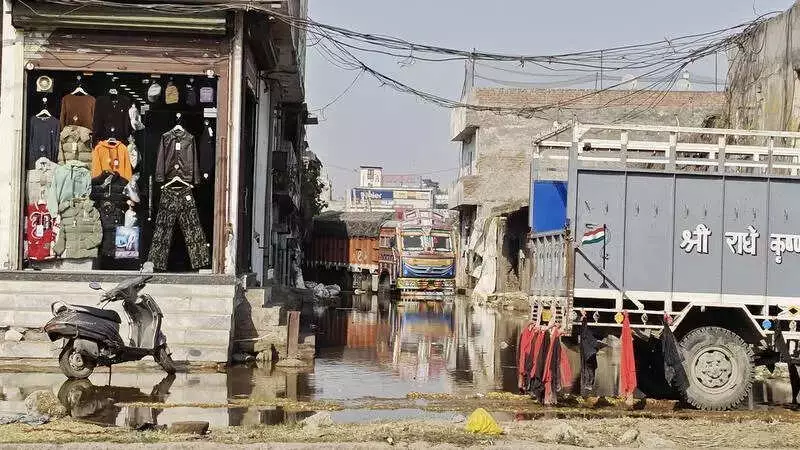
Despite repeated assurances from municipal authorities about resolving operational challenges at Ludhiana's Tajpur Road dairy complex, the civic body has consistently failed to address long-standing waste water drainage problems that have now escalated into a full-blown crisis. The situation has deteriorated significantly in recent days, particularly in the C block of the complex, where the entire area remains submerged under contaminated water while internal roads remain clogged with solid cow dung.
Complete Paralysis of Daily Operations
Dairy farmers operating within the complex report that streets surrounding the facility have become completely impassable for the past two to three days. On Wednesday, the accumulated waste water reached such alarming levels that it spilled onto the main Tajpur Road itself, creating hazardous conditions for both residents and commuters. Although water levels receded from the main thoroughfare by Thursday, the inner lanes of the dairy complex continue to be flooded with dirty, stagnant water that shows no signs of draining away.
The C block at Tajpur Road houses approximately 94 dairy units, all of which have been severely impacted by the ongoing flooding. Cattle have been confined inside their units due to the inundation, creating additional complications for daily operations and animal welfare. The inability to move livestock freely has compounded the challenges faced by dairy farmers who depend on regular operations for their livelihoods.

Blame Game Between Farmers and Authorities
While dairy farmers squarely blame municipal authorities for failing to implement effective systems to channel waste water to the effluent treatment plant (ETP), civic officials have shifted responsibility back onto the farmers themselves. According to official statements, many dairy owners repeatedly choke the drainage system by improperly disposing of solid cow dung into sewer lines, thereby preventing waste water from reaching the ETP as designed.
The area surrounding the Tajpur Road ETP has been particularly badly affected, with waste water accumulating in streets behind the treatment plant. This accumulation not only creates unhygienic conditions but also raises serious concerns about environmental contamination and public health risks for nearby residents.
Unbearable Living and Working Conditions
Lovely Singh, president of the Tajpur Road Dairy Farmers Association, described living and working conditions at the complex as becoming completely unbearable. "Both humans and cattle are essentially trapped inside their units due to the extensive flooding," Singh stated. He further explained that arranging fodder for animals has become a major logistical challenge because vehicles cannot enter the complex through the waterlogged streets.
Singh has demanded immediate relief measures from authorities while urging them to work toward implementing a permanent solution to what has become a recurring problem affecting the dairy community year after year.
Official Perspective on the Crisis
Superintending engineer Ekjot Singh countered that the primary issue stems from what he described as the "careless attitude" of dairy farmers who continue to dump solid waste into drainage systems. According to his assessment, drains become choked as a direct result of this improper disposal, preventing water from flowing to the ETP as originally intended.
"Officials have repeatedly instructed dairy farmers to dispose of cow dung only at designated sites and ensure that only liquid waste water reaches the treatment plant," Singh emphasized. He further noted that the presence of solid cow dung at the ETP itself negatively affects the functioning of machinery installed there, creating additional operational challenges for waste treatment processes.
Workers Bear the Brunt of the Crisis
Ramesh Kumar, a worker at one of the dairy units within the complex, reported that inner lanes have remained waterlogged for more than two consecutive days. Due to the extremely unhygienic conditions created by the stagnant waste water, many workers have been avoiding stepping outside their units altogether.

"This situation requires urgent intervention from authorities," Kumar stressed. "Those of us who work and live within the complex cannot remain confined indoors indefinitely while our livelihoods and living conditions continue to deteriorate."
Broader Implications and Historical Context
The current crisis has reignited discussions about potentially shifting dairy units outside city limits—an idea originally proposed under the Buddha Dariya rejuvenation project. However, authorities have consistently struggled to ensure proper functioning of existing ETPs, and apart from the Haibowal dairy complex, the city has yet to see establishment of additional bio-CNG plants despite clear and pressing requirements for such infrastructure.
The ongoing waste water crisis at Tajpur Road dairy complex highlights systemic failures in urban waste management while exposing the vulnerable position of dairy farmers who depend on functional infrastructure for their operations. As both sides continue to exchange blame, the immediate suffering of workers, animals, and residents within the complex remains unaddressed, calling into question the effectiveness of municipal governance in handling critical urban infrastructure challenges.