

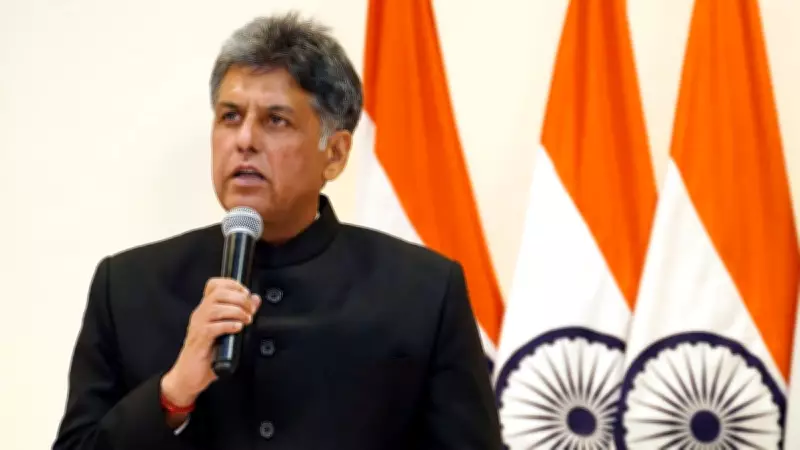
Congress MP Manish Tewari Breaks Ranks, Questions Mediation Role of Global Powers
In a significant departure from party lines, Congress leader and Member of Parliament Manish Tewari has openly questioned the mediation role of global powers in international conflicts. His remarks come amid ongoing tensions in the Middle East, particularly focusing on the recent Iran conflict. Tewari's statements highlight a critical perspective on how major nations intervene in regional disputes, sparking debates on sovereignty and diplomatic efficacy.
Explaining Pakistan's Mediation Attempt in the Iran Conflict
Tewari elaborated on Pakistan's recent attempt to mediate in the Iran conflict, providing insights into the motivations and challenges behind such diplomatic efforts. He explained that Pakistan, as a neighboring country with historical ties to the region, sought to play a mediating role to de-escalate tensions. However, Tewari pointed out that this attempt faced numerous obstacles, including geopolitical complexities and the involvement of other global actors.
According to Tewari, Pakistan's mediation effort was driven by a desire to stabilize the region and prevent further escalation of hostilities. He noted that such initiatives often require careful navigation of international relations, where the interests of multiple stakeholders must be balanced. Tewari emphasized that while mediation can be a tool for peace, it must be approached with transparency and respect for the sovereignty of the nations involved.

Critiquing the Role of Global Powers in Mediation
In his critique, Tewari questioned the effectiveness and impartiality of global powers when they assume mediation roles in conflicts. He argued that these powers often have their own strategic interests, which can bias their interventions and undermine the peace process. Tewari called for a more nuanced approach to international diplomacy, where mediation is conducted with genuine intent to resolve conflicts rather than serving geopolitical agendas.
Tewari's comments reflect broader concerns about the dynamics of global governance and the need for reforms in how international disputes are managed. He suggested that regional organizations and neutral parties might sometimes be better positioned to mediate, as they have a deeper understanding of local contexts and fewer vested interests.
Implications for Regional Diplomacy and Future Conflicts
The implications of Tewari's statements extend beyond the immediate context of the Iran conflict. They raise important questions about the future of regional diplomacy in South Asia and the Middle East. Tewari's break from his party's usual stance signals a potential shift in political discourse, encouraging more open discussions on foreign policy and international relations.
- Increased Scrutiny: Global powers may face increased scrutiny over their mediation efforts, with calls for greater accountability and transparency.
- Regional Initiatives: There could be a push for more regional-led mediation initiatives, leveraging local knowledge and relationships.
- Policy Debates: Tewari's remarks are likely to fuel policy debates within India and abroad, influencing how nations approach conflict resolution.
As the situation evolves, Tewari's insights provide a valuable perspective on the complexities of international mediation and the need for diplomatic strategies that prioritize peace and stability over power politics. His willingness to question established norms highlights the importance of critical thinking in shaping effective foreign policies.






