

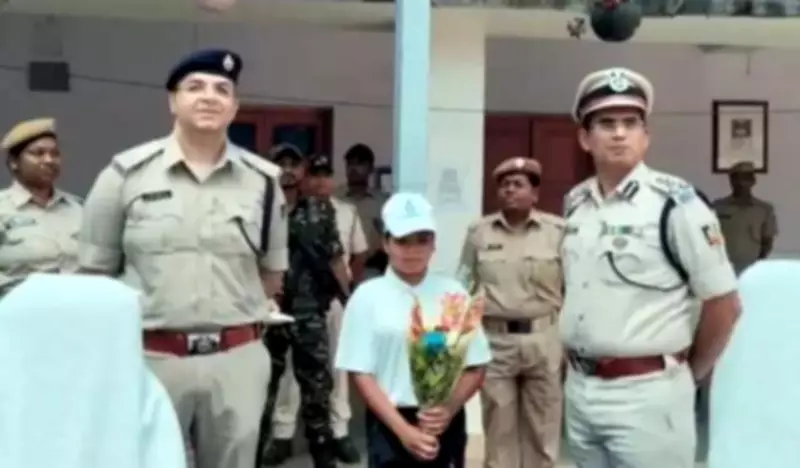
Maoist Surrenderee Mongri Hunanga Issues Video Statement, Counters Family's Denial
In a significant development, Mongri Hunanga, a 19-year-old native of Jharkhand who recently surrendered to Rourkela police, has issued a video statement directly contradicting claims made by her family members. Her family had previously questioned her surrender, asserting she was not associated with the banned Maoist outfit. However, Hunanga has now come forward to clarify her position, stating that her parents are misleading the media.
Details of the Surrender and Family's Allegations
Hunanga surrendered to the Rourkela police on March 30, but her family quickly raised doubts about her involvement with the Maoists. They alleged that she had been lured away from home in February by a young man from their village under the pretext of securing her a job. The family further claimed that police had falsely implicated her, thereby damaging her identity and dignity, and demanded an impartial high-level probe into the matter.
Hunanga's Video Statement: Setting the Record Straight
In her video statement released on Wednesday, Hunanga provided a detailed account of her activities. She revealed that she was with Maoist Sushant, also known as Anmol, and his team in the Kumdihi (Serenguli) forest, where she performed cooking duties alongside another individual named Sunita. According to Hunanga, both she and Sunita fled during a police firing incident and remained in hiding thereafter. Sunita stayed at Hunanga's home for a few days before departing for her own village, while Hunanga ultimately decided to surrender.

Hunanga emphasized, "Now I am in Rourkela and I am not in jail. I am living peacefully. My mother, father, elder brother, and uncle are not telling the truth to the media that I was involved with the group because they fear that I might be jailed in Rourkela." This statement directly addresses the core of her family's concerns, highlighting their apprehension about potential legal consequences.
Police Response and Background Information
Denying the allegations made by Hunanga's family, Superintendent of Police (Rourkela) Nitesh Wadhwani stated on Thursday that there is sufficient proof of her association with the banned Maoist outfit. Wadhwani explained, "We secured her surrender after a thorough investigation. Due to Odisha's improved surrender policy, Naxalites from Jharkhand are surrendering." He noted that three Maoists from Jharkhand have surrendered to Rourkela police in the last six months, underscoring the effectiveness of the state's policies.
Police sources provided additional context, revealing that Hunanga is a member of the local guerrilla squad of CPI(Maoist), South Chotanagra division. She hails from Holomuli village under Chotanagra police station in Jharkhand's West Singhbhum district. Her village is situated inside the Saranda reserve forest, an area frequently accessed by Maoist cadres for supplies. Through local logistic providers, she came into contact with Anmol, who recruited her along with others, according to police sources.
Implications and Broader Context
This case sheds light on the complex dynamics surrounding Maoist surrenders in the region. The conflicting narratives between Hunanga and her family highlight the challenges faced by individuals seeking to leave extremist groups, often compounded by familial fears and societal pressures. The police's assertion of evidence and the mention of Odisha's surrender policy suggest a strategic approach to encouraging defections from Maoist ranks.
As the situation unfolds, it remains crucial to monitor how authorities handle such cases to ensure transparency and justice, while also addressing the underlying issues that drive youth towards such organizations. Hunanga's video statement serves as a pivotal moment in clarifying her stance and potentially influencing public perception and policy discussions on Maoist rehabilitation and surrender mechanisms.






