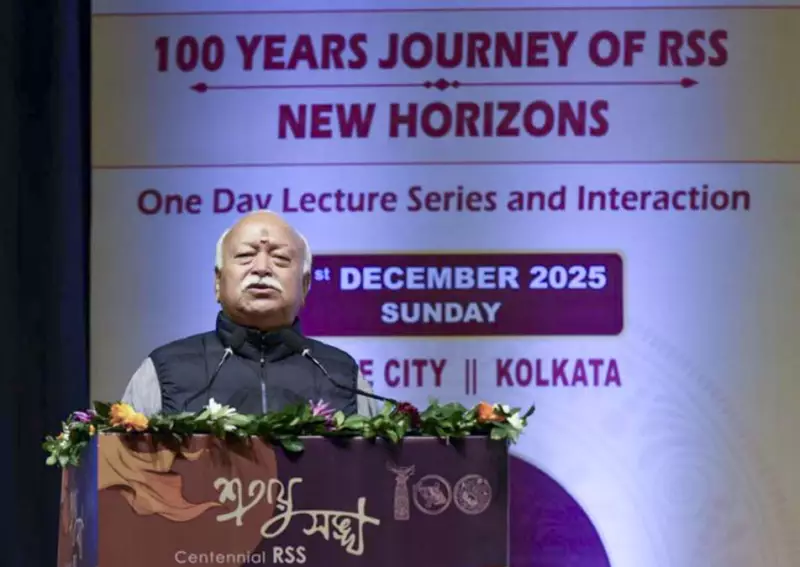
In a significant and assertive address, Rashtriya Swayamsevak Sangh (RSS) chief Mohan Bhagwat has firmly stated that India is fundamentally a Hindu nation and that this identity does not require any formal constitutional approval. The remarks were delivered during his annual Vijayadashami speech at the RSS headquarters in Reshimbagh, Nagpur, on October 22, 2025.
Core Argument: Identity Beyond the Constitution
Mohan Bhagwat, the Sarsanghchalak of the influential socio-cultural organization, presented a clear distinction between the nation's civilizational character and its legal framework. He argued that the essence of Bharat as a Hindu Rashtra is an enduring, historical reality that predates the modern constitution. According to his speech, the constitutional document serves as a set of rules for governance but does not define or grant the nation's core civilizational identity.
"The nation is Hindu. This is a fact. It does not need the approval of the Constitution. The Constitution is for running the country, it is not meant to announce what the nation is," Bhagwat was quoted as saying. This statement forms the central pillar of his address, challenging a long-standing political and legal debate about the secular character of the Indian state as defined in its preamble.

Context and Historical Perspective
The Vijayadashami speech is a key annual event where the RSS chief outlines the organization's perspective on national issues. This year's pronouncement comes amidst ongoing discussions about nationalism, citizenship, and constitutional values in the country's political discourse. Bhagwat elaborated that the term 'Hindu' in this context is not merely religious but denotes a cultural and civilizational identity encompassing all who consider India their motherland and share its value system.
He emphasized inclusivity within this framework, stating that all communities residing in India are part of this larger Hindu national fabric. The speech aimed to position the Hindu Rashtra concept as a natural, organic reality rather than a political project requiring legal validation.
Potential Implications and Reactions
This declaration is poised to reignite intense debate across the political spectrum. Critics are likely to view it as a challenge to the constitutional principle of secularism and the pluralistic fabric of Indian society. Supporters, however, may see it as a bold affirmation of the country's indigenous cultural roots.
The remarks could have several implications:
- Political Discourse: The statement will likely become a focal point in political debates, with parties clarifying their stance on secularism versus majoritarian cultural nationalism.
- Legal Interpretation: It raises philosophical questions about the relationship between a nation's civilizational history and its contemporary constitutional values.
- Social Cohesion: The emphasis on a singular civilizational identity will be tested against India's diverse social and religious landscape.
Mohan Bhagwat's speech in Nagpur underscores the RSS's continued commitment to its core ideological position. By stating that constitutional approval is unnecessary for India's identity as a Hindu nation, he has directly engaged with one of the most fundamental debates about the Indian republic's character. The address marks a clear ideological stand that will undoubtedly influence public conversation and political narratives in the days to come.