

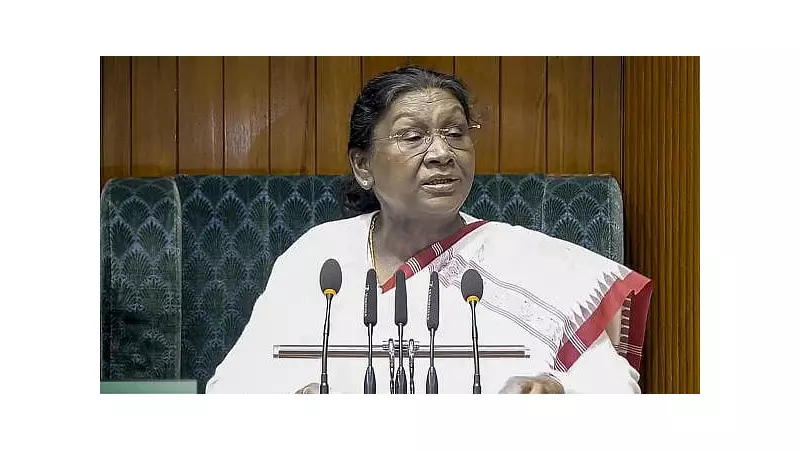
In a significant address, President Droupadi Murmu invoked the legacies of three towering figures in Indian history—Mahatma Gandhi, Jawaharlal Nehru, and Atal Bihari Vajpayee—to call for unity and collaborative efforts on critical national issues. Her speech highlighted the importance of transcending political divides and working together for the nation's progress.
Invoking Historical Icons for Contemporary Challenges
President Murmu emphasized that the principles and visions of Gandhi, Nehru, and Vajpayee remain relevant today as India faces complex challenges. She noted that Gandhi's emphasis on truth and non-violence, Nehru's focus on scientific temper and secularism, and Vajpayee's commitment to inclusive governance and economic reforms offer valuable lessons for addressing current issues.
Key Themes in the President's Address
The President's message centered on several core themes aimed at fostering national cohesion:

- Unity in Diversity: Murmu stressed that India's strength lies in its diversity, and she urged citizens to embrace this pluralism while working towards common goals.
- Collective Responsibility: She called on all stakeholders, including political parties, civil society, and the public, to take collective responsibility for solving national problems.
- Inclusive Development: The President highlighted the need for development that leaves no one behind, echoing the inclusive approaches of the leaders she cited.
Addressing Pressing National Issues
President Murmu pointed out specific areas where unity is crucial, such as economic growth, social harmony, and environmental sustainability. She argued that by drawing inspiration from Gandhi's grassroots activism, Nehru's nation-building efforts, and Vajpayee's consensus-driven politics, India can navigate these challenges effectively.
Reactions and Implications
The address has sparked discussions across the political spectrum, with many praising Murmu's non-partisan appeal for unity. Analysts suggest that her invocation of leaders from different ideological backgrounds underscores a desire to bridge divides and promote a collaborative approach to governance.
In conclusion, President Droupadi Murmu's call for unity, inspired by the legacies of Gandhi, Nehru, and Vajpayee, serves as a timely reminder of the power of collective action in addressing India's national issues. Her speech encourages a renewed focus on shared values and cooperative efforts for the country's future.






