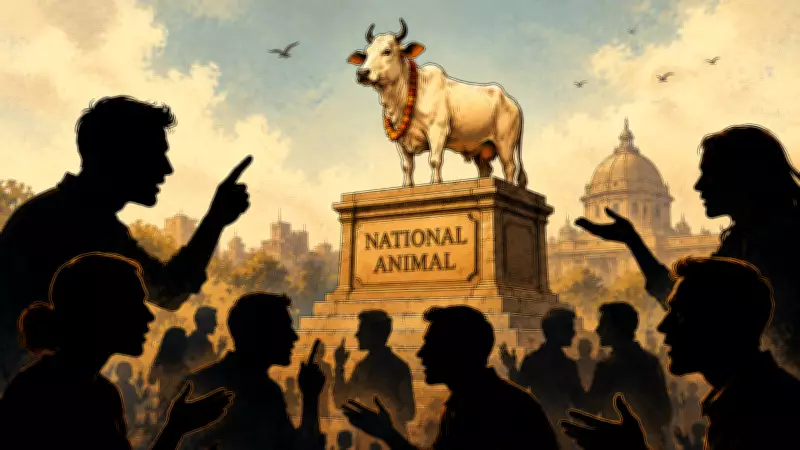
A group of Muslim leaders in India has proposed granting the cow the status of a national animal, arguing that such a move could help end the recurring religious strife over cow slaughter. The suggestion, which has sparked widespread debate, comes amid ongoing tensions between Hindu and Muslim communities over the issue.
The Proposal and Its Rationale
The proposal was put forward by a delegation of Muslim intellectuals and clerics who believe that elevating the cow to a national symbol would transcend religious divides. They argue that the cow is revered by Hindus but also holds economic and cultural significance for all Indians. By making it a national animal, they hope to create a unifying symbol that discourages both cow slaughter and the violence that often accompanies it.
"Cow slaughter has become a flashpoint for communal violence. If the cow is declared a national animal, it would be protected by law, and no community would feel targeted," said Maulana Syed Muhammad Rizvi, a prominent cleric involved in the initiative.

Historical Context and Current Tensions
India has witnessed numerous incidents of violence over cow slaughter, with Hindu groups demanding a nationwide ban and Muslims asserting their right to consume beef. The issue has been politically charged, with several states enacting strict anti-cow slaughter laws. The proposal seeks to find a middle ground by giving the cow a status that commands respect from all communities.
However, critics argue that the move may not resolve the underlying tensions. "The problem is not about the cow's symbolism but about the politics of identity and majoritarianism. Making the cow a national animal could be seen as a concession to Hindu nationalism," said political analyst Dr. Anjali Kumar.
Reactions from Political and Religious Groups
The proposal has received mixed reactions. Hindu nationalist groups like the Vishva Hindu Parishad (VHP) have welcomed the idea, calling it a step towards recognizing the cow's sacredness. "We have always demanded that the cow be given the highest protection. This proposal aligns with our beliefs," said VHP spokesperson Vinod Bansal.
On the other hand, some Muslim organizations have expressed skepticism. "This is a diversion from real issues like poverty and unemployment. We need to address the root causes of communalism rather than symbolic gestures," said Asaduddin Owaisi, president of the All India Majlis-e-Ittehadul Muslimeen (AIMIM).
Legal and Practical Challenges
Legally, declaring the cow a national animal would require a constitutional amendment, as the national animal is currently the tiger. The process would involve parliamentary approval and could face legal hurdles. Moreover, enforcement would be challenging given the diverse dietary practices across the country.
"The cow is already protected in many states, but violence continues. A national status might not change ground realities unless accompanied by strict enforcement and community dialogue," said legal expert Prof. Rajeev Dhavan.
Despite the controversy, the proposal has opened a new avenue for discussion on one of India's most divisive issues. Whether it leads to reconciliation or further polarization remains to be seen.