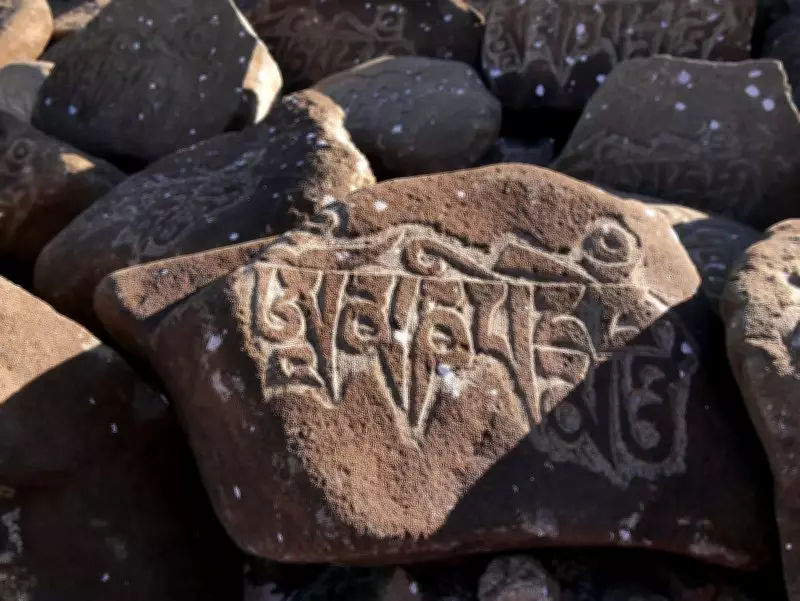
Environmentalists Pradip Krishen and Chetan Agarwal have stumbled upon a set of mysterious rock carvings etched into a quartzite outcrop near the Polo Ground in Delhi's Central Ridge. The discovery, made during a routine biodiversity survey, has prompted experts to call for a detailed scientific investigation to determine the age and significance of the markings.
Accidental Discovery During Biodiversity Survey
Krishen and Agarwal were documenting the rich plant life of the Ridge, as they had done many times before, when Agarwal noticed unusual markings on a large quartzite rock. "The discovery itself was accidental. We were there to study the Ridge's biodiversity, not to look for archaeological remains. Chetan noticed the carvings, which intrigued us. We later brought along a historian friend, who suggested that they could possibly be petroglyphs," Krishen said. Petroglyphs are ancient symbolic images or figures carved or scratched onto rock surfaces.
Carvings Show Two Distinct Patterns
According to Krishen, the markings comprise two distinct patterns. One resembles a row of seven or eight cup-like depressions, or cupules, arranged parallel to one another. The other looks like two ladder-like figures set at right angles. Krishen speculated that the carvings might have been used as a game board or could be a decorative motif, but he stressed that these are personal observations, not archaeological conclusions.

Krishen noted that the carvings are on quartzite, an extremely hard rock, and appear heavily eroded. "To my untrained eyes, the carvings certainly look extremely old, but I am not an expert on petroglyphs, so I cannot express an opinion on their age," he added.
Experts Urge Caution and Scientific Analysis
Archaeologist Dr. Sanjeev Kumar Singh emphasized that while the Aravalis are among the world's oldest mountain ranges and similar carvings have been reported before, such discoveries require careful study. "The Aravalis are among the oldest mountain ranges in the world, so finding rock carvings here is not unusual. Similar carvings have been reported earlier by the Haryana government and researchers, including Dr A K Sharma," Singh said. He added that these carvings cannot be assigned an age or historical significance immediately; they need detailed archaeological investigation, scientific study, and expert discussion before any conclusions can be drawn.
Krishen compared the find to known petroglyphs beneath Ashokan rock edicts, which provide a minimum age of the third century BC. However, he noted that no such comparative evidence exists for the Delhi Ridge carvings. "At some sites, we have a way of establishing a minimum age for petroglyphs. For example, where Ashokan rock edicts have been carved over older rock carvings, we know the petroglyphs cannot be younger than the edicts, which date to the third century BC," he explained. "In this case, however, we don't have any such comparative evidence. All that is visible is that the carvings are extremely eroded."
Next Steps for the Discovery
For now, the carvings remain an intriguing find whose age, purpose, and historical context can only be established through detailed archaeological documentation and scientific analysis. Singh concluded, "At this stage, these carvings are a matter of academic discussion. While they could be significant, it would be premature to speculate on their age or origin without proper evidence."