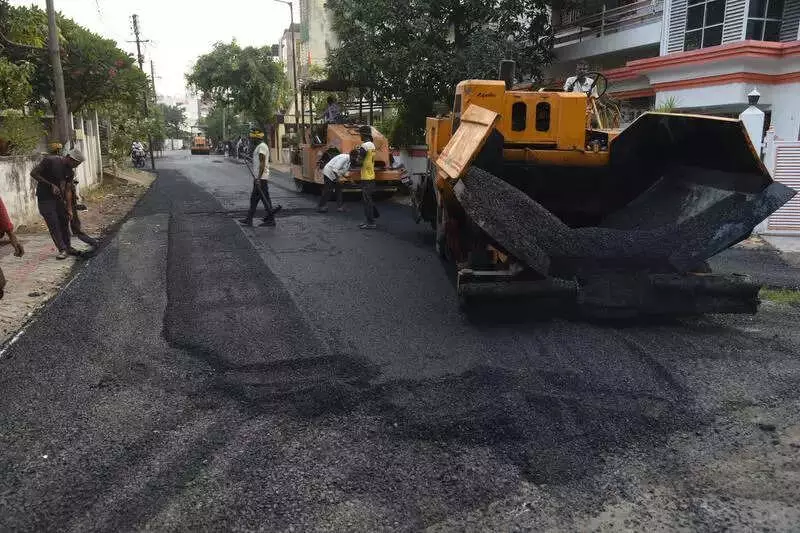
Nagpur Municipal Corporation's Fresh Pothole Repair Tender Sparks Debate
Despite upgrading its hotmix plant last calendar year to strengthen in-house road repair capabilities, the Nagpur Municipal Corporation (NMC) has floated a fresh Rs1.24-crore tender inviting a private firm to repair potholes across the city. This move has triggered significant questions about municipal planning, utilization of public assets, and the real effectiveness of the civic body's road maintenance strategy.
Tender Details and Operational Requirements
According to the tender notice, NMC is seeking bids for "repairing of potholes on tar roads in Nagpur city by jet patcher machine", with an earnest money deposit requirement of Rs1.25 lakh. The contract specifically aims to carry out rapid pothole repairs at multiple locations, particularly on busy city roads, amid mounting complaints from motorists and repeated alerts from enforcement agencies.
Defending the decision, a senior official from NMC's hotmix department explained that the tender was floated out of operational necessity rather than redundancy. "A mobile team is required to attend pothole-related calls. At every isolated place, we cannot move our team to repair a pothole," the official stated. He clarified that the private firm would largely be responsible for attending potholes flagged by the city traffic police and city police, adding that "This jet patcher team is very handy to repair potholes."

Contrasting Infrastructure Upgrades and Outsourcing
The tender came just months after NMC showcased its upgraded hotmix plant, projecting it as a game-changer that would reduce dependency on private contractors and enable faster, more durable repairs using in-house resources. However, this fresh outsourcing move has revived concerns about whether the upgraded facility is being fully or efficiently utilized.
Despite engaging two private firms in the last calendar year, NMC's hotmix department reportedly repaired around 6,900 potholes between January 1 and November 30, 2025. However, serious concerns have been raised about the quality and accountability of these repairs, with sources pointing out that there is no mechanism to check whether pothole repair works carried out by entrusted private firms withstand the defect liability period.
"There is no audit," sources revealed, flagging a major oversight in monitoring public-funded works that raises questions about transparency and accountability in municipal spending.
Technical Considerations and Community Concerns
NMC sources explained that the jet patcher machine allows quick, spot repairs without extensive preparation, making it suitable for emergency situations and high-traffic locations where delays can lead to accidents or congestion. However, critics argue that such repairs are often temporary in nature and do not address underlying issues such as poor road design, faulty drainage systems, and substandard execution of resurfacing works.
Road safety activists and former corporators have questioned the financial logic behind repeated tenders. "Public money was spent on upgrading the hotmix plant. Citizens deserve transparency on how often it is used, how many potholes it repaired, and why contractors are still needed," emphasized a senior activist, highlighting growing public frustration with municipal decision-making.
Broader Implications for Urban Governance
With civic elections concluded and pressure mounting to show quick results on road conditions, this tender has once again highlighted the persistent gap between infrastructure upgrades on paper and their tangible impact on the ground. For commuters navigating Nagpur's cratered roads, the fundamental question remains whether this latest move will bring lasting relief or merely represent another round of temporary patchwork.
The situation underscores broader challenges in municipal governance, where investments in public infrastructure must be matched by effective implementation strategies and transparent monitoring mechanisms to ensure optimal utilization of taxpayer resources and sustainable urban development.