

The Historic Clash Over Indianising Military Music
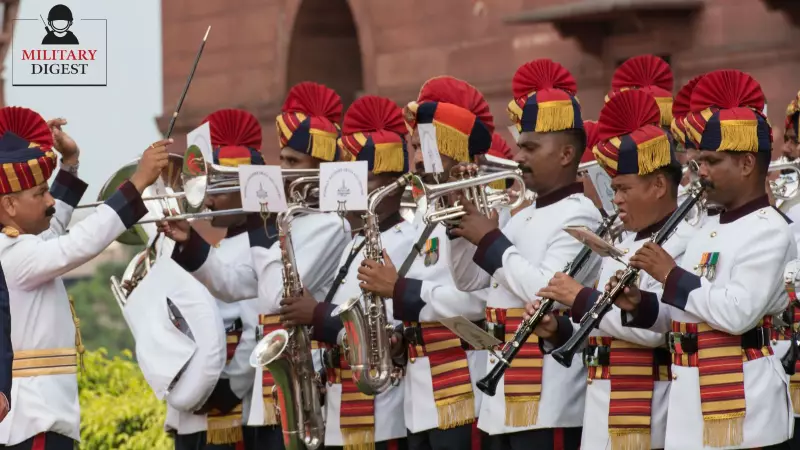
For over a decade now, the resonant sounds of traditional Indian instruments have become an integral part of Republic Day ceremonies organized by the Indian military, including the prestigious Beat Retreat ceremony. However, this harmonious integration represents the culmination of a decades-long debate that once divided the highest echelons of India's leadership.
President Prasad's Vision for an Indian Soundtrack
Archival documents reveal that in 1953, India's first President, Dr. Rajendra Prasad, made a determined push to introduce Indian musical tunes into military music, aiming to replace the foreign compositions that had dominated since British rule. In a letter to then Commander-in-Chief General Rajendrasinhji, President Prasad noted that attempts had been underway for two years to introduce Indian tunes, but these efforts faced challenges because the existing instruments were designed for foreign music.
The President advocated for a fundamental transformation, suggesting that music in the Indian Army should be developed based on Indian musical traditions. He proposed that musical instruments should be adapted and, if necessary, completely changed to suit the requirements of an independent India, which had become a republic just three years earlier in 1950.

Prime Minister Nehru's Practical Reservations
When President Prasad shared his correspondence with the Army Chief with Prime Minister Jawaharlal Nehru, the response revealed significant philosophical and practical differences. In his reply dated May 17, 1953, Nehru acknowledged that the President's suggestions deserved consideration but expressed serious doubts about completely replacing foreign music in military bands.
"What you have written to the Commander-in-Chief certainly deserves consideration, and I hope that the matter will be enquired into. I rather doubt, however, if it is possible or desirable to replace altogether foreign music by our own in so far as military bands are concerned," Nehru wrote in his carefully worded response.
The Core of Nehru's Concerns
Nehru articulated several key concerns that reflected both his understanding of music and his practical approach to governance:
- Different Musical Traditions: Nehru observed that while Indian music had made great progress in its own domain, it had little in the way of orchestral or band music. He noted that recent attempts to adapt Indian music for bands had not been remarkably successful, with the most popular adaptations being cinema tunes that, while catchy, were hardly high-class music.
- Practical Limitations: The Prime Minister questioned how traditional Indian instruments like sitar, veena, sarangi, and tabla could be used in marching bands. "It is a little difficult to imagine people marching with these instruments and playing them at the same time," he remarked with characteristic practicality.
- Preserving Global Connections: Nehru expressed concern about India losing touch with universal musical traditions. "While Indian music should be encouraged and developed in every way, it would be a pity for us in India to get out of touch with the type of music that has become almost universal in the world," he wrote, noting that European music was already fading rapidly from India.
A Nuanced Position Despite Opposition
Despite his apparent opposition to President Prasad's suggestion, Nehru demonstrated a more nuanced position by recommending a comprehensive investigation. He suggested involving experts who understood Indian music to explore how "our old martial tunes" could be adapted to modern conditions, possibly grafting elements from foreign traditions onto Indian foundations.
The Prime Minister acknowledged that some film tunes had been adopted by military bands, and while they weren't suitable for serious performances, they could occasionally be used. He also noted the popularity of existing band music, particularly the mass band performances during the Retreat ceremony, which were "most effective and greatly appreciated."

The Long Road to Implementation
For more than six decades after this exchange, British marching tunes remained the mainstay of brass bands and pipes-and-drums ensembles in the Indian Army, though Indian tunes were gradually being developed by Army musicians. However, these Indian compositions were still played on foreign instruments, as traditional Indian instruments like sitar, santoor, and mridangam were not considered conducive to military requirements at the time.
The turning point finally came in 2015, when President Prasad's vision was realized through the official integration of Indian tunes and instruments into the Beating Retreat ceremony at Vijay Chowk in New Delhi. This marked the successful culmination of a process that began with that 1953 correspondence between India's first President and Prime Minister.
Legacy of a Musical Debate
This historical episode reveals several important aspects of India's early governance:
- The careful balancing between national pride and practical considerations in nation-building
- The respectful disagreement between two founding figures of modern India
- The long gestation period for cultural changes in institutional settings
- The eventual triumph of cultural adaptation over complete replacement
Today, as traditional Indian instruments enhance the Republic Day ceremonies, they represent not just musical innovation but also the resolution of a debate that engaged India's highest leadership. The successful integration demonstrates how patient evolution, rather than sudden revolution, often characterizes meaningful cultural change in national institutions.
The story of Indian military music's transformation serves as a metaphor for India's broader journey – honoring traditions while adapting to contemporary needs, and finding uniquely Indian solutions through dialogue and gradual implementation.





