

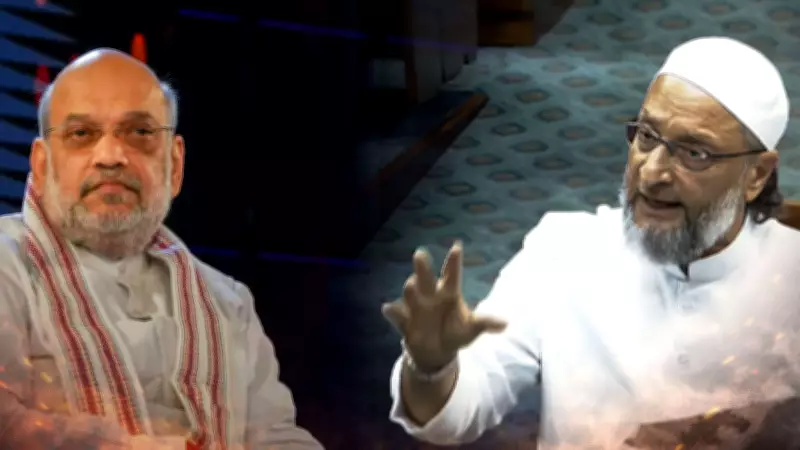
AIMIM Chief Asaduddin Owaisi Issues Stern Warning Over Delimitation Bills
In a forceful address during a parliamentary debate, AIMIM president Asaduddin Owaisi launched a sharp critique against the Central government's proposed delimitation legislation. The Hyderabad MP explicitly cautioned that these Bills, if enacted without adequate safeguards, risk becoming a "permanent wound" for India's democratic fabric and federal structure.
Allegations of Procedural Overreach and Weakening Opposition
Owaisi raised serious concerns about the timing and manner in which the government is advancing the delimitation Bills. He alleged that the ruling party is leveraging its parliamentary majority to push through these significant changes while a substantial portion of the Opposition leadership is preoccupied with ongoing state assembly elections. This dynamic, he argued, creates an uneven playing field and undermines robust legislative scrutiny.
The core of his criticism centers on the potential erosion of the Opposition's strength and a disruption of the delicate federal balance between the Centre and the states. Owaisi emphasized that delimitation is not merely a technical exercise but a profound political process that will reshape representation for decades.

Population-Based Allocation and Regional Disparities
A major point of contention highlighted by the AIMIM leader is the proposed method of allocating parliamentary seats strictly based on population figures. Owaisi warned that this approach would systematically diminish the political influence of southern Indian states in the Lok Sabha. These states, which have generally achieved greater success in population control measures, would see their seat share reduced.
Conversely, northern states with higher population growth would gain a larger number of seats, potentially leading to what Owaisi described as a "northern dominance" in national politics. He framed this not just as a regional issue but as a threat to the principle of cooperative federalism, where all states feel equitably represented in the central legislature.
Risks of Gerrymandering and Minority Representation
Beyond the interstate disparities, Owaisi flagged the dangers of gerrymandering—the manipulation of electoral constituency boundaries to favor a particular party or group. He expressed apprehension that such practices could severely impact the representation of minority communities, including Muslims and other marginalized groups, by diluting their voting strength across redrawn constituencies.
Calling for concrete safeguards, the MP stressed that the delimitation process must be transparent, fair, and designed to protect the interests of all communities. He invoked India's celebrated diversity, arguing that its political institutions must reflect and respect this plurality to remain legitimate and effective.
A Plea for Balanced and Fair Representation
In his concluding remarks, Asaduddin Owaisi made an impassioned appeal for a more considered and inclusive approach to delimitation. He urged the government to incorporate mechanisms that ensure balanced representation for all states, regardless of their population size or demographic trends. The warning was clear: proceeding without these checks could inflict long-term damage on India's democratic equilibrium and social harmony.
The debate places the spotlight on a critical juncture for India's electoral geography, with the AIMIM chief positioning himself as a vocal defender of federal principles and equitable political power-sharing in the world's largest democracy.






