

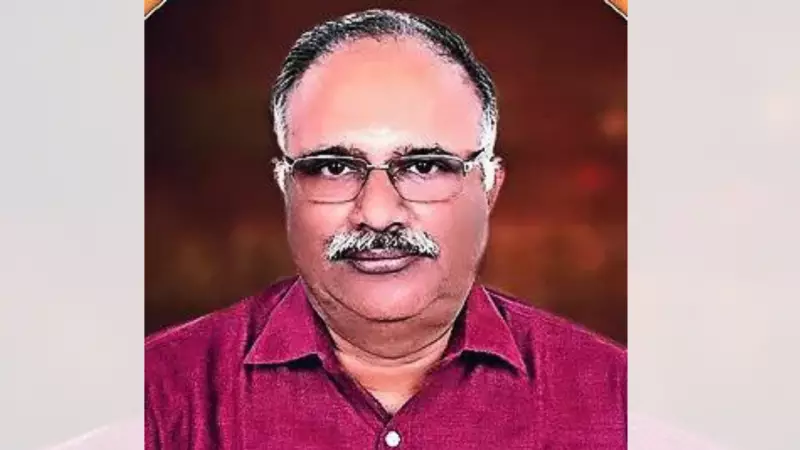
NEW DELHI: RVS Mani, a former officer in the Ministry of Home Affairs (MHA), has been named for the prestigious Padma Shri award this Republic Day eve. His recognition comes amid his pivotal role in uncovering the truth behind two contradictory affidavits filed by the UPA government in 2009, under his signature, in the high-profile Ishrat Jahan encounter case.
The Contradictory Affidavits: A Tale of Two Versions
In August 2009, the first affidavit was filed, citing precise intelligence inputs from central agencies that established Ishrat Jahan as part of an Lashkar-e-Taiba (LeT) module. This module was allegedly tasked with assassinating high-level political functionaries in India. The affidavit detailed the terror antecedents of the four-member group, which included Jahan, Javed Shaikh alias Pranesh Pillai, Jishan Johar, and Amjad Ali. It laid out the sequence of events leading to their encounter in Ahmedabad on June 15, 2004, where all four were neutralized.
Mani later revealed that he drafted this initial affidavit based on intelligence reports he had personally reviewed, describing them as "precise, accurate, and exact." The document even referenced Indian newspaper reports that quoted the LeT mouthpiece 'Ghazwa Times,' which confirmed Jahan's terror links by stating her "veil was removed by Indian police."

A Sudden Reversal: The Second Affidavit
However, in a dramatic turn of events, a subsequent affidavit was filed on September 29, 2009. This version dismissed the evidentiary value of the intelligence inputs and distanced the Centre from the Gujarat government's actions. It asserted that all intelligence inputs do not constitute conclusive proof and emphasized that it was the state government's responsibility to act on such information.
The second affidavit clarified that the Centre was not concerned with such actions and did not condone any unjustified or excessive measures. While the first affidavit argued against a CBI investigation, the second stated that the Centre would not object to an independent inquiry or CBI probe.
Political Interference and Mani's Revelations
Years later, Mani went public, indirectly claiming "political interference" as the reason for revising the affidavit. He disclosed that the second affidavit was not drafted by him; he merely signed and filed it under orders. According to a 2016 statement by then Home Minister Rajnath Singh in Parliament, the revised affidavit was vetted by the then Attorney General and approved by the then Home Minister, P. Chidambaram. Notably, the file notings did not mention any reason for the revision.
Rajnath Singh's statement also cited testimony from 26/11 accused and American LeT operative David Coleman Headley, who confirmed Jahan as "a female terrorist" killed by Indian police in a botched LeT operation.
Personal Ordeal and Literary Contributions
Mani's involvement in the case took a personal toll. He alleged that he was "tortured" by the chief of the Special Investigation Team (SIT) when summoned in 2013. Despite these challenges, Mani has channeled his experiences into writing several books that explore political interference in terror investigations. His notable works include 'The Myth of Hindu Terror: Insider Account of Ministry of Home Affairs' and 'Deception: A Family that Deceived the Whole Nation.'
The Padma Shri award to RVS Mani highlights a complex chapter in India's security and political landscape, underscoring the tensions between intelligence accuracy, governmental accountability, and the pursuit of justice in sensitive terror cases.






