PM Modi Kicks Off Assam Election Campaign with Symbolic Tea Garden Interaction
Prime Minister Narendra Modi officially launched his Assam election campaign on Wednesday with a highly symbolic visit to a tea garden in Dibrugarh, the heart of India's tea industry. The Prime Minister engaged in a meaningful interaction with tea garden workers, particularly focusing on women laborers who form the backbone of Assam's tea production.
Connecting with Assam's Tea Community
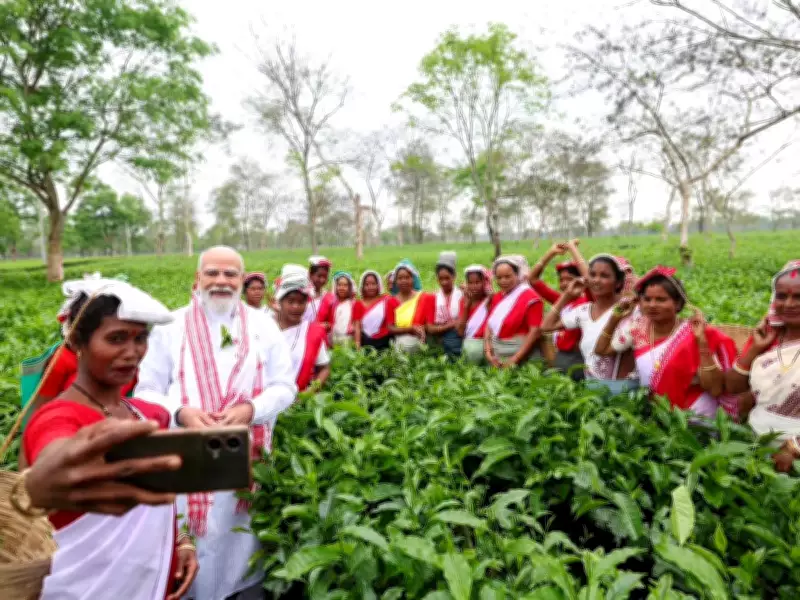
In a gesture aimed at connecting with the state's largest workforce, Modi joined women workers in plucking tea leaves at Manohari Tea Estate in Dibrugarh. He called the workers his "guru" for teaching him how to properly pluck tea leaves, emphasizing his respect for their expertise and labor. The Prime Minister described tea as the "soul of Assam," acknowledging both its cultural significance and economic importance to the region.
During his nearly half-hour interaction with 19 women garden workers, Modi discussed various aspects of their lives including family dynamics, educational opportunities, and wage structures. He specifically inquired about their children's engagement in sports, to which the women responded that several of their wards showed interest in playing football.

Political Significance of Tea Tribes
The visit underscored the substantial political weight of Assam's tea tribes, who constitute a decisive voting bloc across dozens of constituencies. Spread across more than 850 tea gardens, these communities represent nearly 17% of Assam's population and hold significant influence in 35 to 40 assembly seats, primarily concentrated in Upper Assam.
Historically loyal to the Congress party, this community underwent a substantial political shift in 2016 when they moved en masse toward the BJP. The tea garden workers' community traces its origins to recruitment efforts that began in 1859 from across the Chhotanagpur plateau and adjoining forested tracts—areas that today comprise Jharkhand, Chhattisgarh, parts of Madhya Pradesh, Odisha, and bordering regions of Andhra Pradesh, Maharashtra, and Uttar Pradesh.
Cultural Exchange and Policy Discussions
The visit featured rich cultural elements including a traditional Jhumur dance performance and songs sung by the women workers. Modi particularly noted one song that paid homage to 'Jagat Janani Maa,' expressing admiration for how the workers remained deeply connected with their cultural roots despite their challenging work environment.
Beyond cultural exchange, the Prime Minister engaged in substantive policy discussions, listening to concerns about healthcare access and wage structures. He also inquired about Bihu delicacies, demonstrating his interest in local traditions, and reminded workers of his own humble beginnings as a chaiwala (tea seller), creating a personal connection with their profession.
Social Media Engagement and Documentation
Modi actively documented his experience through social media, sharing photos and videos on platform X (formerly Twitter). In his posts, he described the interaction as "very memorable" and praised the contribution of tea garden families to Assam's progress. "Tea is the soul of Assam! The tea from here has made its way across the world," he wrote, highlighting the global reach of Assam's tea industry.
In another post, he noted: "The plucking of tea leaves was followed by the women talking about their culture and of course a selfie!" This documentation served to amplify the symbolic importance of his visit beyond the immediate physical interaction.
The Prime Minister's visit to Dibrugarh represents a strategic opening to his Assam election campaign, directly engaging with a community that holds substantial electoral influence while celebrating the cultural and economic significance of Assam's tea industry. By combining policy discussions with cultural appreciation and personal connection, Modi's approach demonstrates a multifaceted campaign strategy aimed at resonating with Assam's diverse electorate.