

Politician's Daughter Opts for Rs 150 Court Wedding, Donates Lakhs to Unaided Teachers' Welfare
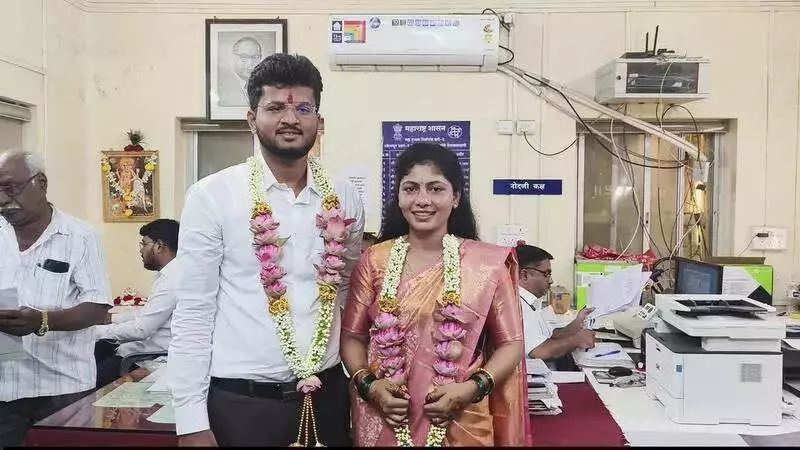
In a refreshing departure from the trend of extravagant political weddings, Sushama Sawant, daughter of former MLC Dattatray Sawant from Solapur's Pandharpur teachers constituency, tied the knot in a remarkably simple court marriage ceremony on Friday. The entire wedding expenses amounted to just Rs 150, with the couple choosing to donate the substantial amount saved—several lakhs of rupees—toward the welfare of children belonging to unaided teachers.
A Ceremony of Simplicity and Social Consciousness
The wedding took place at the registrar's office in Kolhapur, witnessed by no more than 15 close family members and friends. In place of traditional lavish rituals, the groom, Shubham Shinde, tied the mangalsutra around the bride's neck, followed by a simple exchange of floral garlands as attendees applauded the meaningful union.
Sushama Sawant expressed her heartfelt motivation behind this decision: "I am profoundly happy that our new journey begins with such sacred work. Since childhood, I have witnessed my father's relentless fight for the rights of unaided teachers who often don't even receive regular salaries. The children of these educators must be facing numerous difficulties, and we wanted to contribute meaningfully to their welfare."

Rejecting Societal Pressure for Meaningful Impact
Groom Shubham Shinde elaborated on their conscious choice to break away from societal norms: "Simplicity should never be mistaken for inferiority. Our society has developed a troubling race to showcase wealth through wedding extravagance, where bigger celebrations are wrongly equated with greater importance. We respect rituals and traditions but ultimately followed what our socially aware hearts dictated."
The couple emphasized that their decision wasn't about opposing cultural practices but about aligning their celebration with their values. The substantial funds preserved by avoiding a traditional wedding—estimated at several lakhs of rupees—will now directly support unaided teachers and their families, addressing critical financial challenges they face.
A Father's Pride and Practical Advocacy
Dattatray Sawant, known for championing teachers' rights, shared his immense pride in his daughter and son-in-law's decision: "They have demonstrated through action what true cultural richness means. Both are highly educated individuals with even deeper thoughts and social consciousness. By choosing a court marriage without any grandeur, they've set a powerful example."
He further highlighted the plight of unaided teachers: "These educators perform the sacred duty of imparting knowledge without adequate remuneration, many retiring without proper support after lifelong service. The financial burden on them is severe, and their children's futures remain uncertain. Our simple celebration reflects our commitment to addressing these realities."
Sawant believes this practical assistance during his daughter's wedding will inspire many to reconsider their priorities and contribute to meaningful social causes.
Broader Implications in Political and Social Context
This event stands in stark contrast to the growing trend of ostentatious weddings among political families, where celebrations often become displays of wealth and influence. The Sawant family's choice emphasizes substance over spectacle, redirecting resources toward community welfare rather than personal extravagance.
The story resonates particularly in Maharashtra's educational landscape, where unaided teachers frequently struggle with irregular payments and lack of institutional support. By channeling wedding savings toward these educators' children, the couple addresses both immediate needs and long-term educational equity.
This simple yet profound wedding ceremony demonstrates how personal choices can create substantial social impact, challenging conventional norms while advancing genuine community welfare.






