President Murmu Protocol Row Escalates Into Major Political Flashpoint
The political clash between the Central Government and the Mamata Banerjee-led West Bengal administration has intensified dramatically following President Droupadi Murmu's recent visit to the state. The controversy has now evolved into a significant constitutional and political flashpoint, with both sides refusing to back down.
Centre Demands Detailed Report from Bengal Government
The Union Home Ministry has formally requested the West Bengal government to submit a comprehensive report explaining the alleged protocol violations that occurred during President Murmu's visit to a tribal event in north Bengal. This official communication represents a serious escalation in the ongoing dispute between the Centre and the state government.
According to officials familiar with the matter, key state authorities including Chief Minister Mamata Banerjee and top-ranking bureaucrats were conspicuously absent during the President's arrival and reception. This absence potentially violates the established "Blue Book" rules that govern protocol procedures for the country's highest constitutional offices, including the President of India.

Prime Minister Modi Accuses Trinamool of Constitutional Disrespect
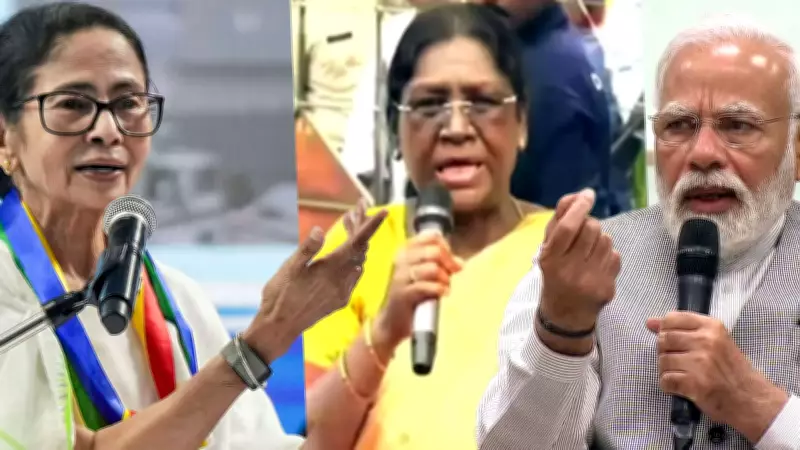
Prime Minister Narendra Modi has publicly accused the Trinamool Congress government of showing disrespect toward both the President and the Constitution of India. In strong statements, the Prime Minister emphasized the importance of maintaining proper protocol for constitutional positions, framing the incident as a matter of national dignity and institutional respect.
The Prime Minister's remarks have added significant political weight to the controversy, transforming what began as a protocol discussion into a broader debate about constitutional values and the relationship between different branches of government.
Mamata Banerjee's Firm Rejection of Allegations
West Bengal Chief Minister Mamata Banerjee has responded with equal force, strongly rejecting all allegations of protocol violations. The Chief Minister has clarified that the event in question was organized by a private body rather than the state government, suggesting that different protocol standards might apply to such independently organized functions.
Banerjee's defense has focused on distinguishing between state-organized events and private functions, while simultaneously challenging the Centre's interpretation of the protocol requirements. Her response indicates a determination to contest the allegations rather than concede any procedural lapses.
Broader Implications for Centre-State Relations
This escalating controversy has triggered a fierce political battle with implications extending far beyond the immediate protocol questions. The dispute raises fundamental questions about:
- The interpretation and application of protocol rules for constitutional positions
- The evolving dynamics of Centre-state relations in India's federal structure
- The intersection of protocol requirements with political considerations
- The balance between ceremonial formalities and substantive governance
As both sides maintain their positions with increasing firmness, the protocol row has transformed into a symbolic confrontation with potential consequences for future interactions between the Central Government and state administrations. The situation continues to develop, with political observers watching closely for further developments in this constitutional and political standoff.