

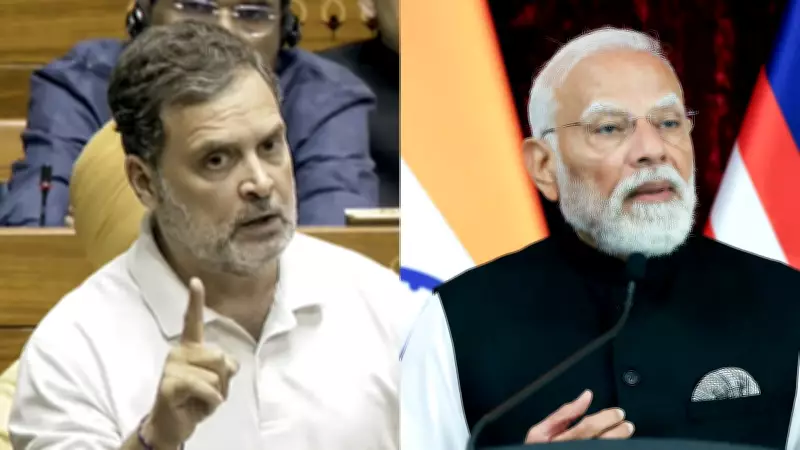
Rahul Gandhi Accuses PM Modi of 'Selling India' in Alleged One-Sided US Trade Deal
In a fiery address in the Lok Sabha, Leader of the Opposition Rahul Gandhi launched a scathing attack on Prime Minister Narendra Modi and the government, alleging that a recent India-US trade deal represents a "full surrender" of national interests. Gandhi claimed that under what he described as a "chokehold," PM Modi signed an agreement that compromises India's economic sovereignty and future.
Allegations of Surrender and Pressure
Rahul Gandhi asserted that the Prime Minister would not typically "sell India" but was forced into this action due to external pressures. "I know that PM won't sell India under normal circumstances. He has sold India because they are choking him," Gandhi stated, adding that he observed fear in PM Modi's eyes during negotiations. He emphasized that no Indian Prime Minister, including Modi, would willingly sign such a deal without being under duress.
Key Concerns Raised Over the Trade Deal
The Congress leader outlined several critical areas where he believes India has conceded ground:

- Tariffs and Trade Rules: Gandhi alleged that India has "buckled on tariffs" and relinquished control over digital trade regulations, potentially disadvantaging domestic industries.
- Data and Digital Sovereignty: He claimed the deal includes no data localisation requirements, allows free data flow to the US, and lacks source code disclosure, handing over what he called "the most valuable asset" of India.
- Economic and Security Impacts: Gandhi warned that Indian farmers could be left vulnerable to competition from large-scale US farms, the textile industry might be "wiped out," and energy security has been compromised, restricting oil purchases.
Gandhi's Vision for Future Negotiations
Rahul Gandhi proposed an alternative approach for dealing with the United States, particularly under President Donald Trump. He stressed that Indian data should be leveraged as a strategic asset in negotiations. "The biggest asset for that is the Indian people," he said, advocating for talks as equals rather than from a position of subservience. He also highlighted the need to protect Indian farmers and maintain energy security, asserting that an INDIA bloc government would prioritize these issues and ensure India is not treated on par with countries like Pakistan.
Political and Financial Implications
Gandhi described the situation as "tragic," suggesting that the future of 1.4 billion Indians has been jeopardized to safeguard the BJP's financial interests, which he linked to an ongoing case in the US. He called for greater transparency and accountability in international agreements to prevent such perceived surrenders.
This controversy adds to the ongoing political discourse in India, with opposition leaders demanding scrutiny of trade policies that could have long-term effects on the nation's economy and sovereignty.






