

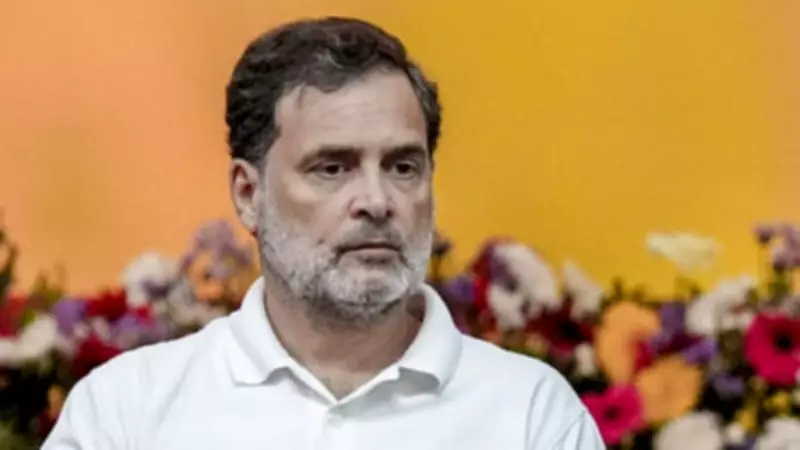
Rahul Gandhi, the Leader of Opposition (LoP) in the Lok Sabha, has submitted a formal dissent note on the selection of the new Central Bureau of Investigation (CBI) director, asserting that his position is not a "rubber stamp" for government decisions. The move marks a significant assertion of parliamentary oversight and has sparked political debate.
Dissent Over CBI Director Appointment
The selection committee for the CBI chief, comprising the Prime Minister, the Chief Justice of India or a Supreme Court judge, and the LoP, met to finalize the appointment. However, Gandhi recorded his disagreement, arguing that the process lacked transparency and that the chosen candidate did not meet the required standards of integrity and independence. He emphasized that the LoP's role is to ensure checks and balances, not to merely endorse executive decisions.
Gandhi's Statement on Accountability
In his dissent note, Gandhi stated, "The Leader of Opposition is not a rubber stamp. My duty is to uphold the Constitution and ensure that key appointments are made without bias or political interference." He further criticized the government for undermining institutional autonomy and called for a more rigorous selection mechanism that prioritizes merit and impartiality.

Political Reactions
The dissent has drawn mixed reactions. Opposition parties have backed Gandhi, praising his stand as a defense of democratic norms. Congress leaders highlighted that the LoP's dissent is a constitutional right and a necessary check on executive overreach. In contrast, ruling party members accused Gandhi of political grandstanding and delaying crucial appointments. They argued that the selection process followed established protocols and that the candidate was fully qualified.
Broader Implications
This incident underscores ongoing tensions between the government and the opposition over key appointments. It also raises questions about the effectiveness of the selection committee and the role of the LoP in ensuring accountability. Legal experts note that while the LoP's dissent does not block the appointment, it serves as a strong statement of disapproval and could influence future reforms. The CBI, often seen as a vital investigative agency, requires a director who commands trust across the political spectrum.
Gandhi's action is expected to fuel further debate in Parliament, where opposition parties have consistently demanded greater transparency in appointments to constitutional and statutory bodies. The government, however, maintains that the process is fair and that the LoP's objections are baseless.






