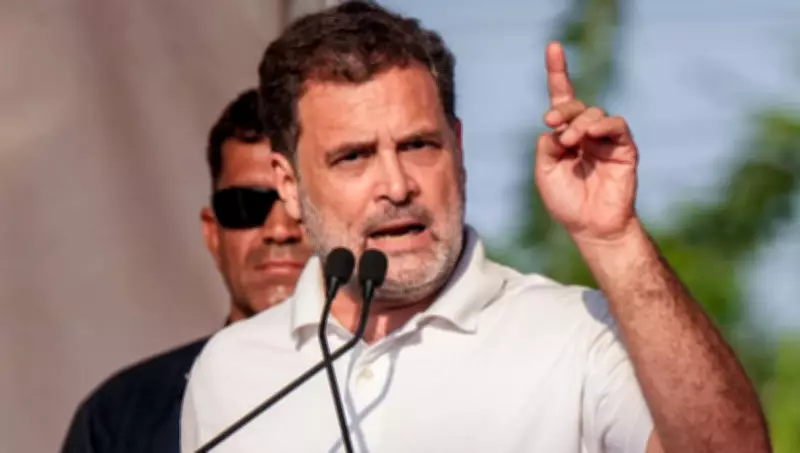
Congress leader Rahul Gandhi on Wednesday warned that an 'economic storm' is approaching India, criticizing Prime Minister Narendra Modi's policies for exacerbating the crisis. Speaking at a press conference in New Delhi, Gandhi stated that the country's economic fundamentals are weakening rapidly due to the government's mismanagement and failure to address rising unemployment, inflation, and slowdown in growth.
Rahul Gandhi's Warning
Gandhi highlighted that the Indian economy is facing multiple challenges, including a sharp decline in GDP growth, a widening current account deficit, and a depreciating rupee. He accused the Modi government of favoring a few industrialists at the expense of the common people, leading to increased inequality and distress among farmers and small businesses.
Impact on Common People
The Congress leader pointed out that the prices of essential commodities have skyrocketed, making it difficult for the middle class and poor to make ends meet. He also noted that the unemployment rate has reached a 45-year high, with millions of young people left without jobs despite the government's claims of progress.

Call for Urgent Measures
Gandhi demanded that the government immediately roll back the Goods and Services Tax (GST) on essential items, increase public spending on healthcare and education, and provide direct cash transfers to the most vulnerable sections of society. He also called for an independent inquiry into the alleged crony capitalism under the Modi regime.
Response from BJP
The ruling Bharatiya Janata Party dismissed Gandhi's remarks as baseless and politically motivated. BJP spokesperson Sambit Patra said that the Indian economy is one of the fastest-growing in the world, and the government's policies have ensured stability and growth despite global challenges. He accused Gandhi of spreading fear and negativity to gain political mileage.
As the economic debate intensifies, experts remain divided on the severity of the situation. Some economists agree with Gandhi's assessment, warning that structural reforms are needed to avert a crisis, while others argue that the fundamentals remain strong and that temporary global factors are to blame for the current slowdown.