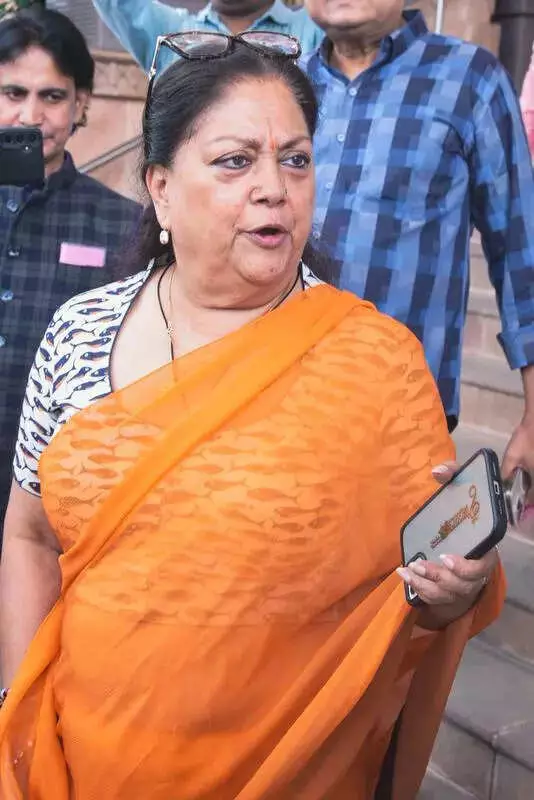
Former Rajasthan Chief Minister Vasundhara Raje delivered a powerful address at the National Jat Women's Conference in Jaipur on Saturday, highlighting the persistent challenges women face in the political arena. She emphasized that women must exert significantly more effort than their male counterparts to gain recognition and secure their place in politics.
Women Need to Work Three Times Harder in Politics
During her speech, Raje made a striking observation about the gender dynamics in Indian politics. "Women have to work three times harder than men to get recognition and space in politics," she stated. This comment underscores the additional hurdles women encounter while navigating the political landscape, despite ongoing efforts to promote gender equality.
Cross-Party Presence at the Conference
The event witnessed participation from members of the Jat community and political representatives across party lines, including Congress and BJP. This diverse attendance highlighted the conference's significance as a platform for discussing women's issues beyond political affiliations.

Persistent Gender Disparity in Public Life
Raje pointed out that despite considerable progress over the years, women remain inadequately represented in various spheres of public life. "Despite progress, women are still not adequately represented. This number should be equal to that of men," she remarked, calling for a more balanced representation.
Improvements in Women's Literacy and Political Participation
The former CM provided key statistics to illustrate the advancements made since India's independence:
- Women's literacy rate has surged from approximately 9% at the time of Independence to around 65% today.
- The proportion of women candidates contesting elections increased from merely 3% in 1957 to nearly 10% in recent times.
Parliamentary Representation of Women
Raje also shed light on the growth of women's representation in India's parliamentary bodies, though she noted that the current figures are still insufficient:
- In the first Lok Sabha, there were only 22 women MPs; today, the number stands at 74.
- In the Rajya Sabha, the count rose from 15 in 1952 to 42, indicating progress but not parity.
Raje's Long Association with Jat Mahasabha
Reflecting on her personal connection with the Jat community, Raje shared, "My relationship with the Jat Mahasabha saw both sweet and sour phases." She acknowledged the significant contributions of Jat women to the development of the state, society, and politics, stressing that their efforts deserve greater recognition.
The conference served as a crucial forum for addressing gender inequality in politics, with Raje's insights emphasizing the need for continued efforts to achieve equitable representation for women in India's democratic processes.