

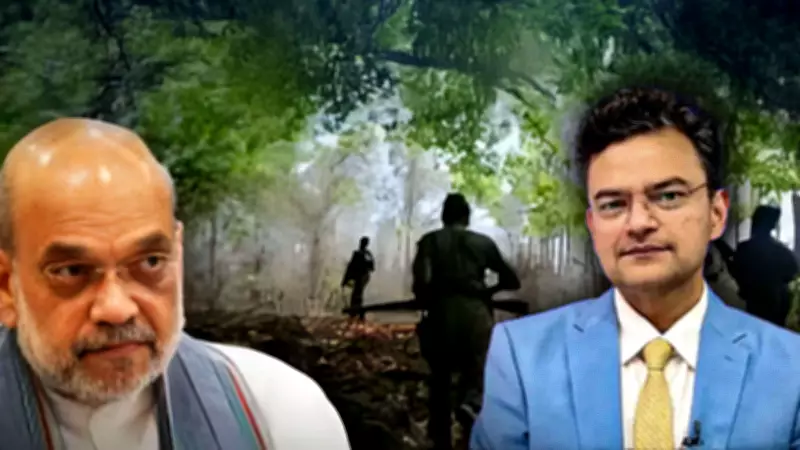
Political Analyst Cautions Against Premature Declaration of Naxal-Free India
In a nuanced commentary on India's internal security landscape, political commentator and author Anand Ranganathan has responded to Union Home Minister Amit Shah's recent assertion that India is now Naxal-free. While acknowledging substantial improvements under the current government, Ranganathan emphasized that declaring complete victory over left-wing extremism might be premature.
Significant Security Improvements Documented
Ranganathan highlighted compelling statistical evidence demonstrating a dramatic decline in Naxal-related incidents across multiple parameters. There has been a sharp reduction in violence, increased surrenders by extremists, and fewer security personnel and civilian deaths in affected regions. The commentator explicitly credited the concerted efforts and strategic approach of the present government for these measurable security gains.
Persistent Ideological Threat Remains
However, Ranganathan presented a crucial counterpoint to the optimistic declaration. He argued that while overt violence has diminished, the underlying ideological networks and support systems that fuel left-wing extremism have not been entirely dismantled. These dormant structures, he warned, retain the potential to facilitate a resurgence of the movement if conditions become favorable again.

The analyst stressed that a purely security-centric approach is insufficient for a permanent solution. "Addressing the root socio-economic causes, such as inequality, perceived injustice, and lack of development in tribal and remote areas, is absolutely essential to prevent any future revival," Ranganathan stated. He framed this as a critical long-term strategy beyond immediate law and order measures.
Democratic Principles and Institutional Resolution
Ranganathan firmly reiterated a foundational democratic principle, asserting that violence can never be justified as a means to achieve political or ideological ends in a democracy. He emphasized that all grievances and issues must be channeled through and resolved by established democratic institutions, foremost among them being an independent judiciary.
Historical Context and Political Resolve
Providing historical perspective, the commentator noted that the Indian National Congress, during its tenure, had also recognized the threat posed by left-wing extremism and implemented certain countermeasures. However, Ranganathan contrasted this with the current administration, suggesting that while recognition was present earlier, it is the "consistency, sustained focus, and political resolve" of the present government that has yielded the more pronounced results seen in recent years.
In conclusion, Anand Ranganathan's analysis presents a balanced view: celebrating tangible security successes while issuing a sober warning against complacency. His commentary underscores that the journey toward completely eradicating the threat of left-wing extremism in India requires continued vigilance, comprehensive socio-economic development, and unwavering commitment to democratic processes.






