

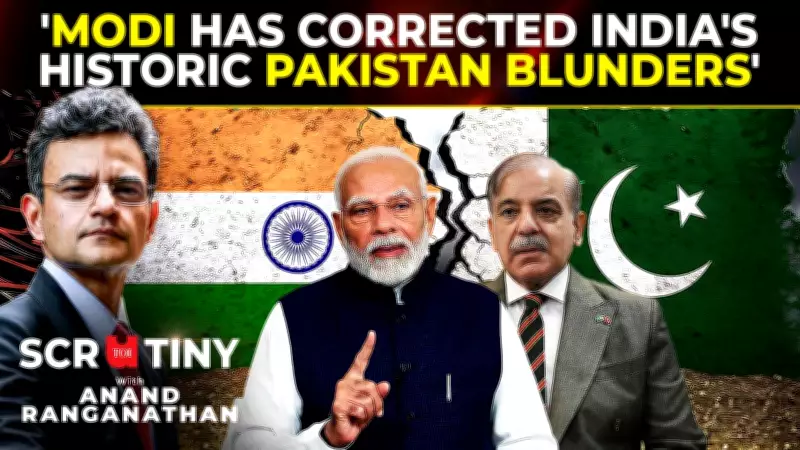
Ranganathan's Dhurandhar Analogy: Pakistan's 'Singular Purpose Is To Destroy India'
In a recent episode of Scrutiny, Anand Ranganathan delivered a scathing analysis of India's Pakistan policy, employing the Dhurandhar lens to frame his explosive verdict. Ranganathan argued that every Oxford-educated Pakistani diplomat and every peace overture serves as a sophisticated mask for a state whose singular purpose is to destroy India.
Contrasting Policy Shifts: From Manmohan Singh to Modi
Ranganathan meticulously outlined the evolution of India's policy toward Pakistan, highlighting a dramatic shift over the years. He pointed to the era under former Prime Minister Manmohan Singh, where India's response was constrained by the nuclear bogey and a refusal to bomb Pakistani terror hideouts following the 26/11 attacks. This approach, he suggested, shackled India for decades, allowing Pakistan to operate with impunity.
In stark contrast, Ranganathan noted the current stance under Prime Minister Narendra Modi's government, which adopts a more assertive posture. The policy now essentially dismisses Pakistan's relevance, encapsulated in the view that 'Pak doesn't exist for us.' This represents a fundamental departure from previous diplomatic engagements and reflects a hardened stance against perceived threats.

Bold Predictions on Pakistan's Future
Beyond critiquing past and present policies, Ranganathan made a bold prediction about Pakistan's future. He asserted that given another decade, Pakistan is likely to fragment further, breaking into two or three more pieces. This forecast underscores his view of the state's internal instability and challenges, which he ties to its adversarial stance toward India.
Ranganathan's analysis extends beyond mere criticism; it serves as a call to recognize what he sees as Pakistan's true intentions. By using the Dhurandhar analogy, he emphasizes that superficial diplomatic efforts and educated elites are merely tools in a broader strategy aimed at India's destruction. This perspective challenges the 'peace caucus' proposals that advocate for renewed dialogue and cooperation between the two nations.
Implications for India's Strategic Approach
The discussion raises critical questions about India's long-term strategy toward Pakistan. Ranganathan's arguments suggest that a policy of engagement or peace talks may be futile if the underlying goal of the Pakistani state remains hostile. Instead, he implies that India should continue or even strengthen its current hardline approach, focusing on security and deterrence rather than diplomatic overtures.
This episode of Scrutiny not only provides a historical comparison of policy shifts but also offers a provocative lens through which to view ongoing tensions. Ranganathan's use of the Dhurandhar analogy adds a cultural and strategic depth to the debate, making it a significant contribution to discussions on India-Pakistan relations.






