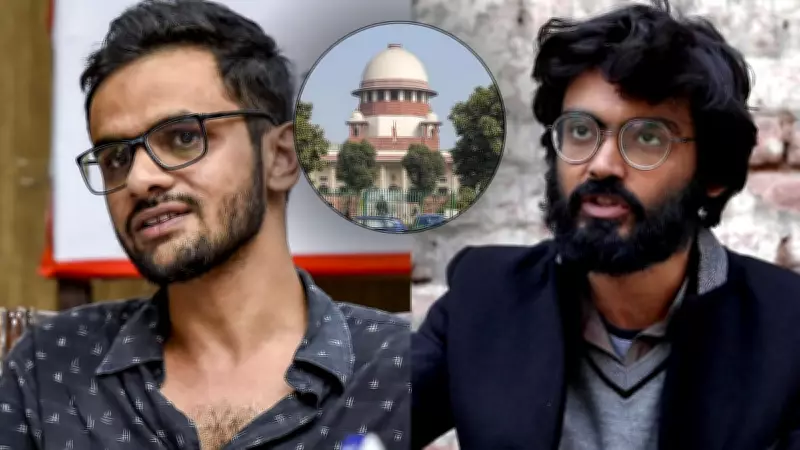
The Supreme Court of India has strongly disapproved of a recent judgement denying bail to Umar Khalid and Sharjeel Imam, reiterating the fundamental principle that 'bail is the rule and jail is the exception.' The observation came from a bench that found it difficult to accept the reasoning in the earlier case of Gulfisha Fatima v. State.
Supreme Court's Strong Observations
The bench, while hearing the bail pleas of Khalid and Imam, both accused in the 2020 Delhi riots conspiracy case, expressed its dissatisfaction with the previous judgement that had denied them relief. The Court noted that the principle of bail being the rule and jail the exception is a cornerstone of the Indian criminal justice system and must be upheld unless there are compelling reasons to deny bail.
Questioning the Gulfisha Fatima Judgement
The Supreme Court specifically questioned the findings in the Gulfisha Fatima case, which had been cited to deny bail to the accused. The bench observed that the approach taken in that case was difficult to sustain and did not align with established legal principles. This indicates a potential shift in the Court's stance on granting bail in cases involving serious allegations under the Unlawful Activities (Prevention) Act (UAPA).

Implications for Umar Khalid and Sharjeel Imam
Umar Khalid, a former JNU student, and Sharjeel Imam, a PhD scholar, have been in custody since September 2020. They are accused of being the 'masterminds' behind the Delhi riots that occurred in February 2020. The Supreme Court's observations have raised hopes among their legal teams that bail may be granted soon. The Court has scheduled the matter for further hearing to allow the prosecution to respond to the new submissions.
Legal Experts Weigh In
Legal experts have welcomed the Supreme Court's reaffirmation of the bail principle. Senior advocate Kapil Sibal, representing one of the accused, stated that the Court's remarks send a strong message that personal liberty cannot be curtailed arbitrarily. The case is being closely watched as it could set a precedent for other UAPA-related bail matters.
Background of the Case
The 2020 Delhi riots resulted in over 50 deaths and hundreds of injuries. The police have charged several activists and students under the UAPA for allegedly conspiring to incite violence. The Supreme Court's intervention comes amid growing concerns over the prolonged detention of accused individuals without trial.
The next hearing is expected to take place in the coming weeks, where the Court will decide on the bail applications after considering the arguments from both sides.