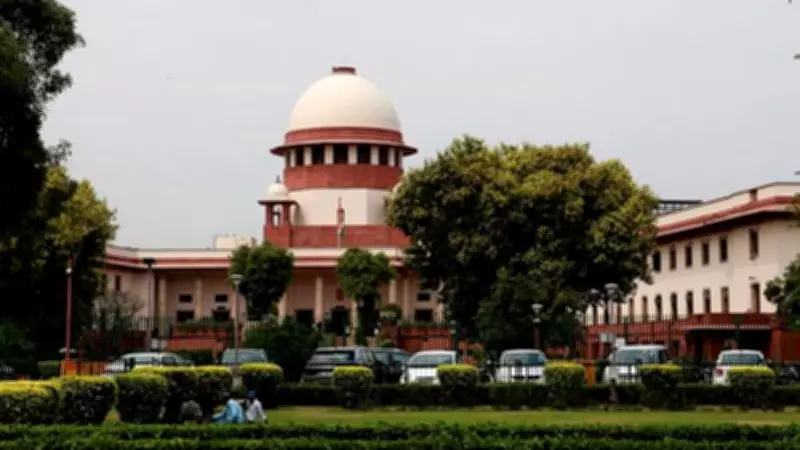
The Supreme Court of India has reserved its verdict on a series of petitions challenging the constitutional validity of the Special Intensive Revision (SIR) exercise being conducted by the Election Commission of India. The decision came after extensive arguments were presented before a bench comprising Chief Justice Surya Kant and Justice Joymalya Bagchi, highlighting significant concerns about the electoral roll revision process.
Petitioners Highlight Structural Problems in SIR Process
Advocate Prashant Bhushan, representing the petitioner NGO Association for Democratic Reforms (ADR), argued before the court that the current SIR exercise suffers from fundamental structural problems. He contended that unlike the previous SIR conducted in 2003, the current revision attempts to create the voters' list de novo or from a clean slate, which has led to numerous complications.
Bhushan emphasized that the Election Commission has placed an excessive burden on voters during this process. "The reason why this structural problem has arisen is because in this SIR, they have placed the onus on the voter," he stated. He explained that voters are required to fill enumeration forms and provide specific documents, with failure to comply resulting in exclusion from draft electoral rolls.

Concerns About Voter Exclusion and Demographic Impact
The petitioner raised alarming concerns about the demographic impact of this approach, noting a noticeable reduction in voter percentages compared to the adult population. Particularly concerning was the decline in women voter registration. Bhushan argued that "many people especially those who are weaker...like women, migrant workers etc are unable to fill up the forms" when such burdensome requirements are imposed.
This disproportionate impact on vulnerable populations has become a central point of contention in the legal challenge against the SIR methodology. The petitioners maintain that the current approach creates unnecessary barriers to electoral participation.
Court Directives Regarding Tamil Nadu Voter Notices
In a related development, the Supreme Court bench addressed an application filed by DMK secretary R S Bharathi concerning the SIR process in Tamil Nadu. The court directed the Election Commission to publish the names of approximately 1.16 crore individuals who had been served notices citing "logical discrepancies" in their voter registration details.
The bench ordered that these names be prominently displayed at gram panchayat bhavans and other public places in taluks across the state. Those identified in the logical discrepancy category were given a 10-day window to submit their documents or objections either in person or through authorized representatives to their respective Booth Level Officers.
Balancing Transparency with Privacy Concerns
Senior Advocate D S Naidu, appearing for the Election Commission, raised privacy concerns about publicly displaying detailed reasons for the discrepancies. The court acknowledged these concerns and directed that only brief reasons be mentioned alongside the names, striking a balance between transparency and individual privacy rights.
The bench further emphasized the need for adequate manpower to be provided to both the Election Commission of India and state election commissions to ensure smooth implementation of the SIR process across all affected regions.
Standardization of Procedures Across States
In a significant development, the Supreme Court indicated that it expects the Election Commission to follow similar procedures in all states where the Special Intensive Revision exercise is currently underway. This directive came after Senior Advocate Naidu urged the court to ensure uniformity in the publication of names and discrepancy resolution processes nationwide.
The court's observation suggests a move toward standardized implementation of the SIR exercise, potentially affecting electoral roll revision processes in multiple states beyond Tamil Nadu. This development could have far-reaching implications for how voter registration discrepancies are addressed throughout the country.

As the Supreme Court reserves its final verdict on the constitutional validity of the SIR exercise, all parties await a decision that could significantly impact India's electoral processes and voter inclusion mechanisms. The court's eventual ruling will determine whether the current methodology for electoral roll revision withstands constitutional scrutiny or requires substantial modification.