

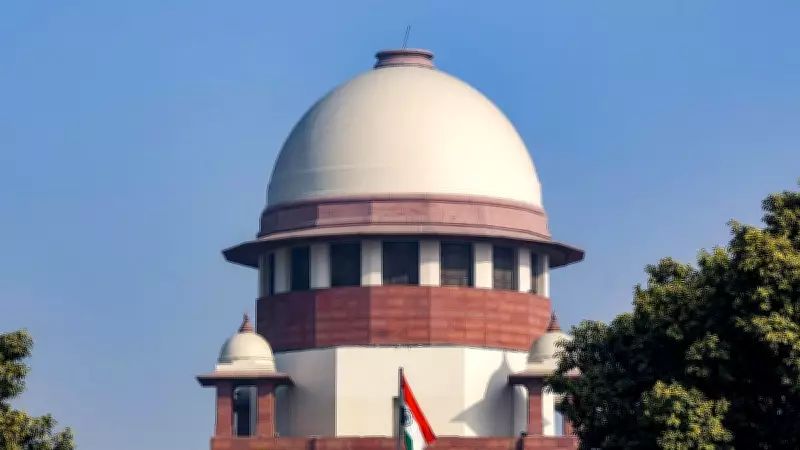
The Supreme Court of India has made a significant observation, stating that RTI activism has transformed into a new business venture. The court made this remark while denying anticipatory bail to RTI activist Rakesh Kumar Behl and his associate. A bench comprising Justices Sandeep Mehta and Vijay Bishnoi delivered the verdict on June 15, 2026.
Supreme Court's Observation
The bench expressed concern over the misuse of the Right to Information (RTI) Act. The court noted that many individuals are using RTI as a tool for personal gain rather than for genuine public interest. The observation came during the hearing of a plea filed by Behl and his aide seeking anticipatory bail in a case registered against them.
Details of the Case
Rakesh Kumar Behl, a known RTI activist, and his associate were booked under various charges. The exact nature of the allegations has not been disclosed in the court's order. However, the Supreme Court's refusal to grant anticipatory bail indicates the seriousness of the matter. The bench stated that the activism under the RTI Act has become a business, and the court cannot support such activities.

The court further noted that the RTI Act is a powerful tool for transparency and accountability. However, when used for ulterior motives, it undermines the purpose of the legislation. The bench emphasized that genuine activists should not be discouraged, but those exploiting the system must be dealt with strictly.
Implications of the Verdict
This verdict is likely to have far-reaching implications for RTI activists across the country. It sends a strong message that the misuse of the RTI Act will not be tolerated. The Supreme Court's stance may lead to stricter scrutiny of RTI applications and the motives behind them.
Legal experts have weighed in on the decision, with many supporting the court's view. They argue that the RTI Act should be used for public good, not for personal vendettas or monetary gains. However, some activists have expressed concern that this might deter genuine whistleblowers from using the RTI mechanism.
Reactions from the Activist Community
The activist community has reacted with mixed feelings. While some agree that there is a need to curb misuse, others fear that the court's observation could be misused to target genuine activists. They have called for a balanced approach that distinguishes between genuine public interest and malicious intent.
As the case progresses, further details are expected to emerge. The Supreme Court's order is a reminder that the RTI Act, while a powerful tool, must be used responsibly.






