

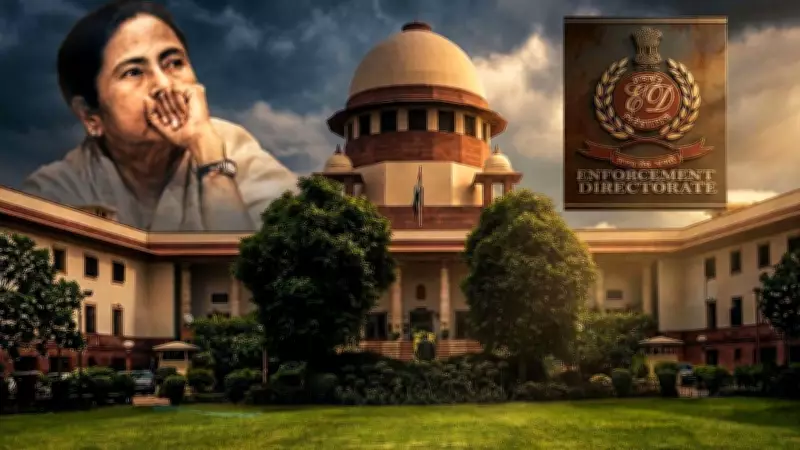
Supreme Court Issues Stern Warning Over Alleged Political Interference in ED Raid
In a significant judicial intervention, the Supreme Court of India has delivered a sharp rebuke to West Bengal Chief Minister Mamata Banerjee regarding allegations that she interfered with an Enforcement Directorate raid at the Kolkata office of I-PAC, a political consultancy firm. The court described the situation as "extraordinary" and issued a grave warning that such actions could severely undermine democratic principles and the autonomy of investigative agencies.
Constitutional Implications and Federal Balance
This case has escalated beyond a mere legal dispute, evolving into a broader constitutional debate concerning the delicate balance of power between elected state governments and central investigative bodies like the ED. The Supreme Court's remarks highlight far-reaching implications for India's federal structure and the rule of law, emphasizing that any overreach by political figures into law enforcement operations poses a direct threat to democratic governance.
The court underscored that investigative agencies must operate without political pressure to ensure justice and maintain public trust. This development comes amid ongoing tensions between state and central authorities, raising critical questions about:

- The independence of enforcement agencies
- The limits of political authority in operational matters
- The safeguarding of democratic institutions from interference
Background and Context of the Raid
The Enforcement Directorate conducted the raid at I-PAC's office as part of an investigation, though specific details of the case remain under legal scrutiny. Allegations suggest that Chief Minister Banerjee attempted to obstruct or influence the raid, prompting the Supreme Court's intervention. The court's criticism reflects growing judicial concern over potential erosion of democratic norms through such incidents.
Legal experts note that this ruling could set a precedent for future interactions between state governments and central agencies, reinforcing the need for clear boundaries to prevent conflicts that risk destabilizing India's constitutional framework.
Broader Impact on Governance and Rule of Law
The Supreme Court's stance serves as a reminder of the judiciary's role in upholding democratic values and checking executive overreach. By publicly addressing these allegations, the court aims to deter similar actions that could compromise the integrity of investigations and, by extension, the democratic process itself.
This incident underscores the ongoing challenges in maintaining a harmonious federal system where both state and central entities respect their respective roles. The warning issued by the court is a call to action for all political leaders to prioritize institutional integrity over partisan interests, ensuring that democracy remains robust and unjeopardized in the face of such controversies.






