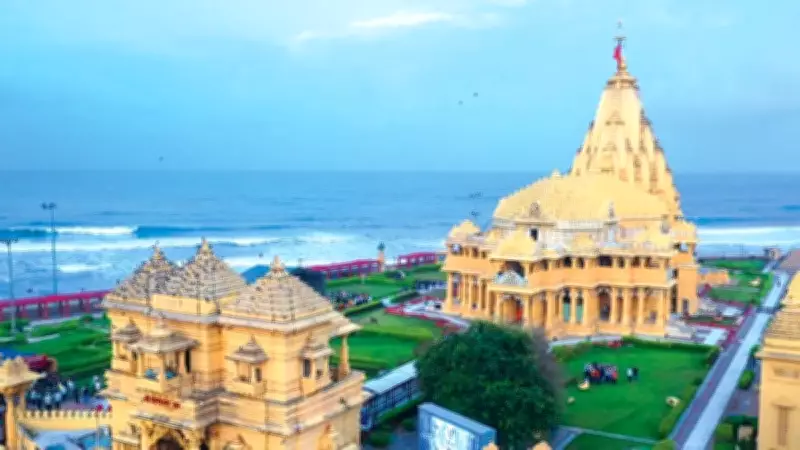
The Somnath Temple, one of the twelve Jyotirlingas, holds a special place in Hindu mythology and Indian history. Located in Prabhas Patan near Veraval in Gujarat, this ancient temple has witnessed numerous invasions and reconstructions, symbolizing resilience and faith.
History of Somnath Temple
The temple is believed to have been built by the Moon God Soma, hence the name Somnath, meaning 'Lord of the Moon'. It is mentioned in ancient texts like the Rigveda and Puranas. Over centuries, it was destroyed multiple times by foreign invaders, including Mahmud of Ghazni in 1024 AD, who plundered its wealth. Each time, it was rebuilt by Hindu rulers, such as the Solanki king Bhima I and later by the Maratha ruler Ahilyabai Holkar.
Invasions and Reconstructions
The temple faced attacks from Mahmud Ghazni, Alauddin Khalji, and Aurangzeb. After independence, Sardar Vallabhbhai Patel initiated its reconstruction in 1951, and it was completed in 1955. The current structure reflects Chalukya architecture, with intricate carvings and a majestic shikhara.

Significance of Somnath Temple
As a Jyotirlinga, it is considered one of the most sacred Shiva temples. The temple's location on the Arabian Sea coast adds to its spiritual aura. The Amrit Mahotsav marks 75 years of its reconstruction, celebrating the temple's revival and cultural heritage.
The temple also has a unique feature: a flagpole that changes color daily, symbolizing the cycle of time. The sound of the ocean waves and the chanting of mantras create a divine atmosphere for devotees.
The Amrit Mahotsav includes cultural events, discourses, and rituals, drawing pilgrims from across the globe. It is a testament to the enduring spirit of Indian civilization.