

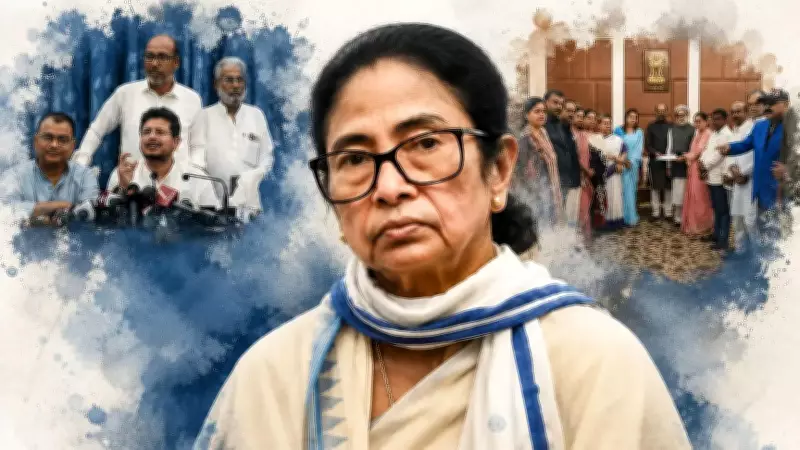
As Mamata Banerjee's Trinamool Congress (TMC) implodes, with many prominent figures leaving to support a party they had previously denounced as 'communal,' a Muslim friend drily remarked, 'There goes another secular warrior!' Banerjee herself served as a minister in a BJP-led government under Prime Minister Atal Bihari Vajpayee between 1999 and 2001, and briefly in 2004, before reinventing herself as an anti-BJP crusader and a champion of minority rights. This dramatic shift highlights the fragility of 'secular' regional parties that often prioritize power over ideology.
The TMC's Internal Collapse
The exodus of TMC leaders to the BJP underscores a broader trend where regional parties, once seen as bulwarks against the BJP's Hindu nationalist agenda, are losing their secular credentials. The defections are not merely opportunistic but reflect a deeper ideological vacuum within these parties. They have failed to offer a coherent alternative to the BJP's narrative, instead relying on personality politics and caste-based alliances.
Implications for Indian Politics
The TMC's implosion is the final nail in the coffin for the idea that regional parties can effectively counter the BJP's dominance. With the Congress Party also in decline, the opposition space is shrinking, leaving the BJP unchallenged in many states. This development raises questions about the future of secularism in Indian politics, as regional parties that once championed minority rights now eagerly align with the BJP.

In conclusion, the TMC's disintegration signals a paradigm shift where regional parties are abandoning their secular foundations, paving the way for a more homogenized political landscape dominated by the BJP.






