Trump's Self-Focused Fourth of July
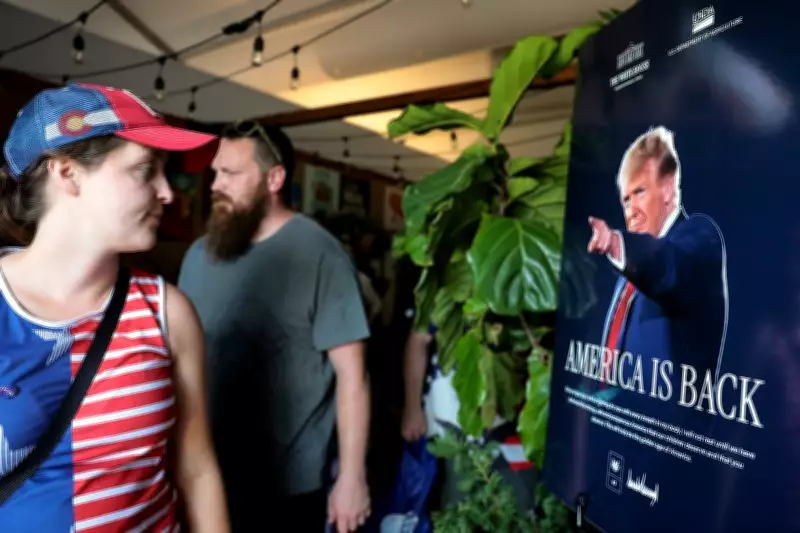
On the Fourth of July, as the United States celebrates its 250th anniversary of independence, President Donald Trump is seizing the moment to place himself at the center of the national narrative. He has effectively declared himself Patriot-in-Chief, putting his face on commemorative $250 bills and passports, according to historian Clare Corbould in an analysis for The Conversation.
A giant structure on the White House's South Lawn, built for a pay-per-view UFC bout on his 80th birthday, was nicknamed the Arc de Trump. The name was a nod to the Arc de Triomphe, but Trump's attempt to brand the structure was thwarted when a court ordered his name removed from another federal building.
Historical Context of Presidential Patriotism
Trump is not the first president to use patriotism during a crisis, but Corbould argues his approach is uniquely intense. He attempts to fuse patriotism with personal loyalty, so that love of country becomes synonymous with loving him. Earlier presidents used patriotism to narrate national character or emphasize change.

George Washington demonstrated patriotism by stepping down after two terms, showing the republic's commitment to popular sovereignty over monarchy. President Gerald Ford, facing the aftermath of Watergate and economic stagnation, marked the 200th anniversary with a low-key ceremony at Thomas Jefferson's Monticello to naturalize immigrants as citizens.
Global Mission vs. Inward Loyalty
Many presidents, from Thomas Paine to Franklin Roosevelt, framed patriotism as a global mission. Roosevelt's 1941 'Four Freedoms' speech argued the US must defend freedom of expression, worship, from want, and from fear worldwide. This internationally-focused rhetoric persisted through the Cold War.
After 9/11, George W. Bush emphasized loyalty, telling nations, "Either you are with us, or you are with the terrorists." The USA PATRIOT Act intensified surveillance and stifled dissent, foreshadowing Trump's emphasis on loyalty.
Contradictions in American Freedom
Corbould highlights that American freedom has always been exclusionary. Washington enslaved hundreds of people. Woodrow Wilson segregated the federal service and promoted racist myths. Roosevelt's New Deal and GI Bill excluded African-Americans, Native Americans, and other people of color.
In this regard, Trump's inward-looking patriotism is familiar, though more explicit about exclusion. What is new is the fusion of patriotism, personal loyalty, and the idea that Trump embodies the nation itself. This is the patriotism of a corporate raider: acquire the institution, put your name on the façade, reward loyalists, and extract value.
The 250th anniversary does not require asking if Trump is politicizing patriotism—patriotism is always political. The question is whether patriotism can serve the greater good or become just another asset for Trump to own.