DMK Leader's Provocative Statement Ignites Political Firestorm in Tamil Nadu
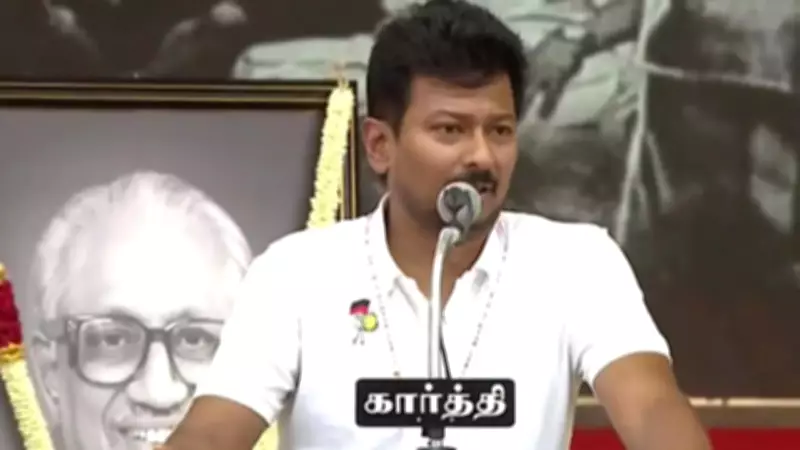
Tamil Nadu Deputy Chief Minister Udhayanidhi Stalin has unleashed a significant political controversy with his recent remarks about Prime Minister Narendra Modi and his family. During a DMK Youth Wing event held in Coimbatore, the young leader made statements that have reverberated across the national political landscape, drawing sharp reactions from the ruling Bharatiya Janata Party.
"We Fear Neither PM Modi Nor His Father"
Udhayanidhi Stalin declared boldly that the DMK "neither fears the Prime Minister nor his father." He elaborated on this position by contrasting public reactions to television appearances by different leaders. "Whenever Modi appears on television, people get frightened about what he is going to announce," he stated, specifically referencing demonetization and COVID-19 lockdown announcements that he claimed created widespread anxiety among citizens.
In contrast, the deputy chief minister portrayed his father and Chief Minister M.K. Stalin's television appearances as occasions for public celebration. "If Stalin appears on TV, people are happy about the new announcement schemes," he asserted, positioning the DMK as a party committed to welfare initiatives for Tamil Nadu. Udhayanidhi emphasized that his party would never compromise on rights and welfare measures for the state's residents.

BJP Launches Fierce Counterattack
The remarks prompted an immediate and forceful response from BJP spokesperson Shehzad Poonawalla, who accused DMK leaders of repeatedly engaging in personal attacks against the Prime Minister and his family members. Poonawalla connected Udhayanidhi's latest comments to previous controversies involving the deputy chief minister, including allegations of inflammatory statements against the Hindu community.
"Congress went shirtless, topless, and characterless in the way it protested at the AI Summit," Poonawalla stated, before turning his criticism toward the DMK. "And now the DMK, its ally, has gone senseless, ethicless, and moralless." The BJP spokesperson specifically referenced Udhayanidhi's past remarks about Hindu traditions and alleged threats, suggesting a pattern of inflammatory rhetoric.
Poonawalla expanded his criticism to include the broader INDIA Alliance, accusing opposition parties of targeting Prime Minister Modi's family background and OBC community status. "Imagine, during the Bihar elections, the INDIA Alliance targeted and abused his mother," he claimed, alleging that opposition leaders have used more than 150 abusive words against the Prime Minister's parents.
Historical Context and Electoral Implications
The political confrontation occurs against the backdrop of Tamil Nadu's upcoming 2026 assembly elections, which are scheduled for the first half of that year. The DMK-led alliance aims to promote what it calls the 'Dravidian Model 2.0' as it prepares to face the BJP-AIADMK coalition in what promises to be a fiercely contested battle.
Adding complexity to the electoral landscape is the anticipated entry of actor-turned-politician Vijay with his newly formed Tamilaga Vettri Kazhagam (TVK), potentially transforming the contest into a three-way competition. This development could significantly alter traditional voting patterns and alliance dynamics in the southern state.
Recent Electoral Performance and Alliances
In the 2021 Tamil Nadu assembly elections, the DMK demonstrated substantial electoral strength by securing 133 seats independently. When combined with its alliance partners, the performance was even more impressive:
- Congress won 18 seats
- PMK secured 5 seats
- VCK captured 4 seats
- Other parties and independents claimed 8 seats
The Secular Progressive Alliance (SPA), led by the DMK and including Congress, collectively achieved 159 seats in the 234-member assembly. Meanwhile, the National Democratic Alliance secured 75 seats, with AIADMK emerging as the largest constituent of that coalition with 66 seats.

This current controversy highlights the intensifying political tensions as Tamil Nadu approaches another crucial electoral contest, with personal attacks and ideological battles becoming increasingly central to the political discourse in the state.