Tamil Nadu's political landscape is marked by an extraordinary phenomenon: supporters who are willing to die for their leaders. This is not a rhetorical question but a recurring reality, from the grief-stricken suicides following MGR's death in 1987 to the stampede at Vijay's rally in 2025 that killed 41 people.
The Legacy of MGR and Jayalalithaa
In December 1987, Tamil Nadu plunged into mourning after the death of MG Ramachandran (MGR), the founder of the AIADMK and a legendary actor-turned-chief minister. Supporters drank poison, set themselves on fire, and died of heart attacks. MGR was not just a leader but a guardian figure, embodying the 'revolutionary leader' or 'Puratchi Thalaivar'. His death triggered a wave of self-harm that echoed later in 2001 and 2014 when J Jayalalithaa faced legal troubles, and after her death in 2016, the AIADMK reported at least 470 supporter deaths.
The Rise of Vijay and the Karur Stampede
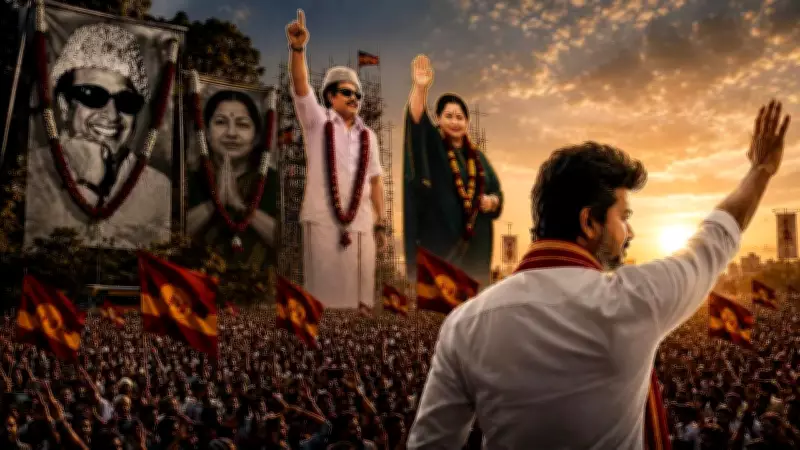
In September 2025, lakhs gathered in Karur to see superstar Vijay, who was on the verge of forming a government. The crowd endured hours under the sun, and by the end, 41 people had died in a stampede. This tragedy fits a familiar script where cinematic idols become political messiahs, blurring the line between screen and state.

Voting Patterns and the Underdog Template
Tamil Nadu's voters often prioritize leaders who project suffering and uplift over narrow caste or religious identities. Despite deep social stratification—Scheduled Castes make up 20% and SC/ST/OBC groups over 75%—electoral appeal transcends these categories. Leaders like MGR and Karunanidhi built their legitimacy on autobiographical hardship, translating poverty into policy. MGR's first question to his cabinet about childhood poverty was not symbolic but a governing ethic rooted in empathy. Vijay, from the Velalar Christian community, inherits this pattern of diluting identity into a universal language of deprivation.
Cinema as Political Training Ground
The transition from cinema to politics is integral to Tamil Nadu's system. CN Annadurai and M Karunanidhi used theatre and screenwriting as political tools. MGR transformed his on-screen protector persona into a mass political structure, founding the AIADMK in 1977. J Jayalalithaa consolidated this model as 'Amma', anchoring authority in personal symbolism and welfare. This actor-led governance became durable, not experimental.
Fan Clubs as Political Infrastructure
Fan clubs for stars like MGR and Rajinikanth evolved into organized social networks involved in welfare and local mobilization. These structures later became informal political infrastructure, activated during elections. The model persists across generations, with figures like Vijayakanth and the anticipated but unrealized entry of Rajinikanth. Cinematic visibility is treated as pre-political legitimacy.
Emotional Bonds: 'Amma' and 'Thalapathy'
Leaders are folded into family vocabulary—'Thalaivar' (leader) and 'Amma' (mother)—replacing institutional distance with emotional proximity. This parasocial bonding, built through cinema's repeated portrayal of stars as protectors, spills into political perception. Welfare politics reinforces the idea that the leader is a direct source of dignity. MGR and Jayalalithaa became emotional institutions; Vijay, known as 'Thalapathy' (commander), enters politics with a pre-built emotional economy from decades of films positioning him as protector and moral force.
Vijay's Victory: Continuation, Not Break
TVK chief Vijay won 110 seats in the Tamil Nadu elections, becoming the single largest party—a result no exit poll predicted but one that was inevitable given the historical context. His rise reflects the same structural conditions: a pre-existing fan base, emotional identification with screen roles, and a political culture that recognizes cinematic popularity as legitimacy. The scale and immediacy have changed, but the model is a continuation of a half-century-old tradition adapted to a newer media environment.