

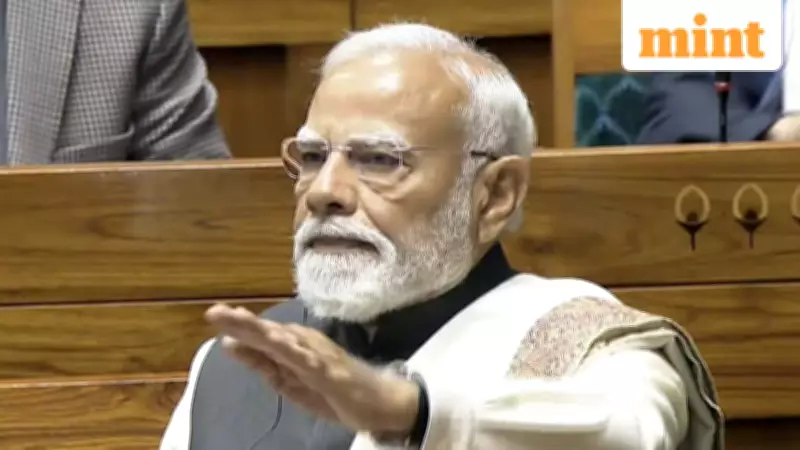
The Lok Sabha witnessed a historic and tumultuous session on Thursday as it passed the Motion of Thanks on the President's address, but without the customary reply from Prime Minister Narendra Modi. This significant parliamentary event unfolded amid vociferous protests by opposition members, creating a charged atmosphere in the House.
Unprecedented Parliamentary Procedure
According to reports from PTI, this incident marks the first time since 2004 that the Motion of Thanks has been cleared without a response from the Prime Minister. The absence of the Prime Minister's reply breaks with longstanding parliamentary tradition, where the leader of the government typically addresses the House during this important debate.
Limited Participation and Historical Context
During the session, only three Members of Parliament were able to deliver their speeches before proceedings were disrupted. This limited participation highlights the intensity of the opposition's protests. The last similar occurrence was in 2004, when then-Prime Minister Manmohan Singh was unable to respond to the budget debate due to parliamentary circumstances.

Speaker's Actions and Voting Process
Lok Sabha Speaker Om Birla took charge of the proceedings by putting the opposition amendments to the Motion of Thanks to a vote. These amendments were subsequently rejected by the House. Following this, Speaker Birla read out the Motion of Thanks to the President for her address to both Houses of Parliament on January 28.
The motion was ultimately passed by a voice vote, even as opposition members continued their sloganeering and protests. The persistent disruptions led Speaker Birla to adjourn the proceedings until 2:00 PM, allowing for a temporary pause in the heated exchanges.
Broader Parliamentary Implications
This development raises important questions about parliamentary decorum and the functioning of democratic institutions during times of political disagreement. The Motion of Thanks is a crucial parliamentary exercise that allows for discussion of the government's agenda as outlined in the President's address.
The absence of the Prime Minister's reply, combined with the limited debate and opposition protests, underscores the current political tensions within India's parliamentary system. As the session was adjourned amid continuing protests, it remains to be seen how future parliamentary business will be conducted in this charged political environment.






