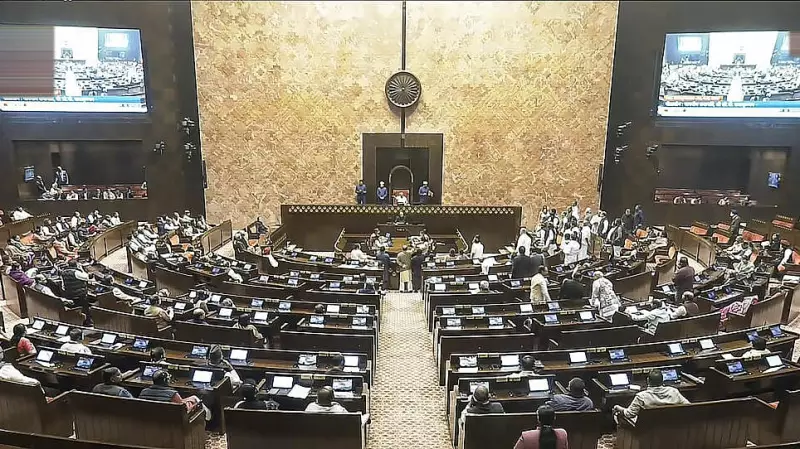
In a dramatic display of protest, opposition members staged a walkout from the Rajya Sabha on Tuesday, December 2, 2025. The move came after the government declined to provide a specific timeline for a discussion on the critical issue of electoral reforms.
Demand for Debate Sparks Confrontation
The Upper House witnessed heated exchanges as opposition leaders, led by Congress President Mallikarjun Kharge, pressed for an immediate debate on what they termed as urgent electoral reforms. The government, represented by Deputy Chairman C P Radhakrishnan, did not accede to the demand to give the topic preferential treatment over the listed business of the day.
Frustrated by the government's refusal to commit to a schedule, opposition MPs raised slogans within the chamber, disrupting the proceedings. Their core argument was that discussions on reforming the electoral process, often referred to as Special Intensive Revision (SIR) in parliamentary parlance, should be prioritized given its significance for democratic integrity.

The Walkout and Its Immediate Aftermath
Following the sloganeering, the opposition bloc collectively decided to stage a walkout. This action underscored their dissatisfaction with the ruling dispensation's approach to the issue. The walkout is a symbolic parliamentary tool used to register strong dissent and draw public attention to a matter.
The event highlights the ongoing tensions between the treasury and opposition benches on key policy discussions. December 2, 2025, marks another chapter in the frequent parliamentary standoffs, with the opposition insisting on its right to set the debate agenda on matters of national importance.
Broader Implications for Parliamentary Functioning
This incident raises questions about the scheduling of debates on substantive issues. The opposition's stance is that electoral reforms are fundamental and cannot be indefinitely delayed. The government's position, however, is typically centered around following the pre-agreed agenda and the discretion of the chair.
Such walkouts, while disruptive, are a part of India's robust democratic process where differing viewpoints clash. The onus now lies on both sides to find a middle ground to ensure that vital discussions like these are held in a timely manner, without bringing the house to a standstill. The political fallout from this event may influence the dynamics of future parliamentary sessions.