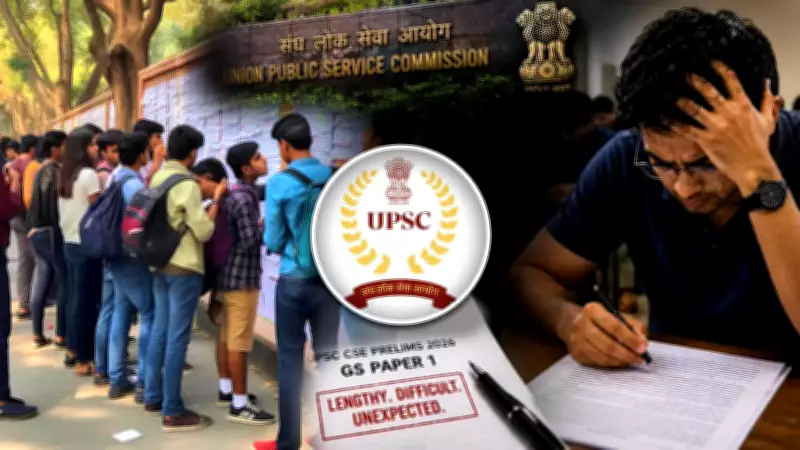
The Union Public Service Commission (UPSC) Civil Services Preliminary Examination 2026 has ignited intense discussions among aspirants and educators, with the General Studies (GS) Paper 1 being widely described as one of the toughest and lengthiest in recent memory. Held on May 25, 2026, the exam saw over eight lakh candidates appearing across the country. Many aspirants reported difficulty in completing the paper within the stipulated two-hour time limit, citing excessive reading material and unpredictable questions.
Unprecedented Difficulty Level
Educators and coaching mentors noted that the GS Paper 1 this year deviated significantly from previous trends. The questions were not only more analytical but also required extensive reading comprehension, leaving little time for revision or cross-checking. Several serving bureaucrats and former toppers also weighed in, expressing surprise at the increased complexity. The general consensus is that the paper tested not just knowledge but also speed and endurance under pressure.
Aspirants Voice Concerns
On social media platforms and in post-exam discussions, aspirants expressed frustration over the paper's length and difficulty. Many questioned whether UPSC has deliberately shifted towards a more exhausting and time-intensive examination pattern. Some pointed out that the paper seemed designed to filter out candidates based on time management rather than subject mastery. Others highlighted that the unpredictability of questions made prior preparation feel inadequate.

Broader Implications
This year's UPSC Prelims results could see lower cutoff marks if the trend of high difficulty continues. However, experts caution that aspirants must adapt to evolving exam patterns. The debate also raises questions about the future direction of the civil services examination and whether UPSC intends to emphasize analytical skills over rote learning. As the wait for answer keys and results begins, the 2026 Prelims will likely be remembered as a watershed moment in UPSC history.
Reactions from the Community
Coaching institutes have already started analyzing the paper and plan to release detailed reviews. Many are advising aspirants to focus on improving reading speed and practice with time-bound mock tests. Meanwhile, the UPSC has not yet commented on the feedback, but the intense reaction from the aspirant community suggests that the examination pattern may come under review in the coming months.