

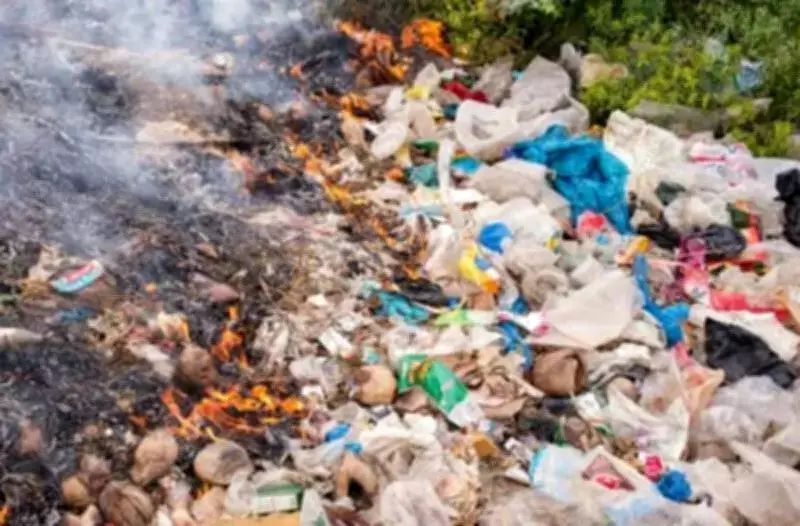
Belagavi's Rural Waste Management in Disarray Despite Government Initiatives
In a stark illustration of failed implementation, rural areas of Belagavi district are grappling with a severe garbage crisis, with waste being dumped indiscriminately on roadsides, despite government schemes aimed at scientific disposal. Although the central government established Shree Shakti units at the gram panchayat level under the Swachh Bharat Mission to manage rural waste through women's self-help groups, the reality on the ground tells a different story.
Ineffective Implementation Leads to Sanitation Hazards
The Swachh Bharat Mission scheme, launched four years ago, was designed to promote cleanliness and scientifically dispose of garbage in rural areas by empowering women's self-help groups. In Belagavi district, training was provided to members of 317 self-help groups, and 198 out of 500 gram panchayats received grants for garbage disposal. Each of these panchayats was equipped with a tipper to transport waste to solid waste disposal units, constructed at a cost ranging from Rs 25 lakh to Rs 30 lakh each.
However, allegations persist that gram panchayats are not allocating sufficient funds for door-to-door collection and disposal, leading to heaps of uncollected waste. As a result, garbage collection and processing have not met expectations, transforming many roads into makeshift dumps. This negligence has raised significant sanitation and environmental concerns across the district's rural landscapes.

Roads Become Dumping Grounds, Especially Near Major Highways
The garbage problem has intensified in villages under panchayats that connect to national, state, and district main roads, which link cities and towns. Despite large populations in these areas, proper disposal is largely absent. In some locations, waste is collected only once or twice a month, loaded onto tractors or tippers, and dumped in distant lakes, canals, or government land.
Regular garbage collection occurs in only a handful of panchayats, while most villages rely on landfills where raw waste is dumped, minimizing perceived urgency for waste management. Environmentalists point out that due to gram panchayat negligence, residents are forced to dump garbage on roadsides, as alternative arrangements have not been made.
Waste Disposal Units Misused or Closed, Exacerbating the Crisis
To address rural garbage issues, the government set up waste disposal units for scientific management, but gram panchayats have failed to utilize them effectively. Many of these units are now closed or misused for other activities, compounding the problem. Consequently, garbage generated in rural areas is increasingly dumped on both sides of main roads in villages.
Locals complain that waste is also thrown into empty plots and, in many cases, set on fire, further polluting the environment. This haphazard disposal highlights the gap between policy intentions and on-ground execution.
Staffing and Funding Shortfalls Hinder Progress
According to Zilla Panchayat officials, out of 500 gram panchayats in Belagavi district, garbage collection and disposal work has been implemented in 198. Work on disposal units is ongoing in 28 gram panchayats, with 338 trained personnel and 320 women trained to drive garbage collection vehicles. However, a critical issue is the lack of separate grants for salaries, leading to improper payment of staff.
This financial shortfall has made members of women's self-help groups reluctant to take up garbage disposal work, stalling efforts to improve the situation. ZP CEO Rahul Shinde has stated that emphasis will soon be placed on scientific garbage collection in all gram panchayats, with steps taken for proper disposal, but challenges remain.
The ongoing crisis in Belagavi underscores the need for better funding, stricter implementation, and community engagement to achieve the goals of the Swachh Bharat Mission and ensure a cleaner, healthier rural environment.






